Tidbits of History — October 2026

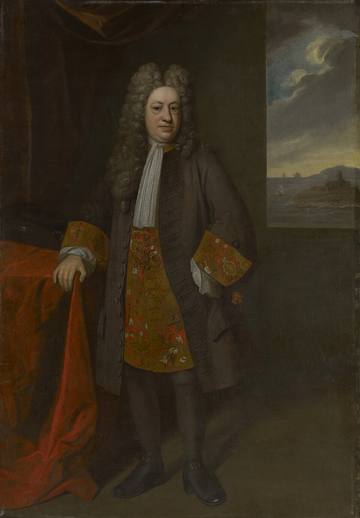
Full-length 1717 portrait of Elihu Yale by Enoch Seeman, benefactor and namesake of Yale University

Interesting Facts From Our Past — by John Devoti

Often, horror fiction tells of mad scientists who experiment on themselves, usually with dreadful consequences. Possibly the most famous of these is The Strange Case of Dr. Jekyll and Mr. Hyde by Robert Louis Stevenson. Sometimes, real-life scientists will also try this. Many probably fail and end up in obituaries. But when scientists succeed, they can make major advances. For example, Jonas Salk worked on a polio vaccine with funding from the March of Dimes. He developed a vaccine that used dead polio cells to boost immunity. When experts balked at human testing, despite success in lab animals, Salk conducted his own tests. In 1953, he administered the vaccine to volunteers, himself, his wife, and his children. No one contracted the disease, and all developed anti-polio antibodies. He then conducted a larger test with over a million subjects a year later, and announced the success in 1955; by 1957, the vaccine was widely available.

Dr. Evan O’Neill Kane liked to operate on himself. This was not because of masochistic tendencies, but because he needed to prove a point that local anesthesia was safe and could be used instead of the more dangerous general anesthesia. In 1919, one of his fingers developed a dangerous infection, and using a local anesthetic, he amputated it. Two years later, he performed a more serious operation, removing his own inflamed appendix, using only Novocaine to numb the area. In both cases, an experienced surgeon oversaw the operations. The surgeries proved that general anesthesia was not the only way to numb a patient. Kane operated on himself again in 1932 at age 70. An inguinal hernia suffered after a horse ride six years earlier had worsened. Having performed operations on himself several times, he saw no reason not to do it again. During the surgery, he joked with his assistants but grew serious as he approached the most critical part of the repair, saying, “The risk is here, and I have to deal with it.” He then finished the operation with minimal help.

Three hundred and twenty-five years ago, on October 9, 1701, the Collegiate School of Connecticut, which would later become Yale University, was chartered in Old Saybrook. The General Court of Connecticut created the school “wherein Youth may be instructed in the Arts and Sciences who [through] the blessing of Almighty God may be fitted for employment both in Church & Civil State.” Nathaniel Lynde deeded a building and ten acres to the school in Saybrook. However, in 1716, despite protests from Saybrook residents and a deed stipulating that the school must remain there, the trustees decided to relocate to New Haven. In 1718, Elihu Yale donated a large amount of books and money to the school, prompting the trustees to rename the institution Yale College. It was renamed Yale University in 1887.

Three hundred years ago, on October 28, 1726, Jonathan Swift published the novel Gulliver’s Travels. It had a subtitle of Travels into Several Remote Nations of the World. In Four Parts. By Lemuel Gulliver, First a Surgeon, and then a Captain of Several Ships. While children usually read the book today, that was not Swift’s original intent. He meant the book “to vex the world rather than divert it.” Swift was a social critic who enjoyed pointing out society’s ludicrousness, especially in politics. The Travels mocked military powers that fought wars over trivial issues, the aristocracy that treated others as insignificant, and scholars whose projects often led to nothing. Even today, terms from the book for societies Gulliver encountered, like Lilliputians and Yahoos, are still used to describe certain groups.

One hundred and twenty-five years ago, on October 12, 1901, President Theodore Roosevelt changed the name of the president’s official residence from the Executive Mansion to the White House on all documentation. Over the years, the residence was called the “President’s Palace,” the “President’s House,” and the “Executive Mansion.” The building was originally whitewashed in 1798 to protect the porous sandstone in intense cold. After the War of 1812, in 1818, lead paint replaced the whitewash. The house was often called the “White House” because of its first painting. Roosevelt’s official renaming was part of a larger remodeling effort he initiated. In 1902, with funds allocated by Congress, he oversaw construction of two additions: a west wing to house the executive offices, and an east wing that originally served as the visitor’s entrance. Later, the First Lady’s offices were added.

Seventy-five years ago, on October 20, 1951, the “Johnny Bright incident” occurred. Johnny Bright, an African-American star football player for the Drake Bulldogs in Des Moines, Iowa, was playing against Oklahoma A&M (now known as Oklahoma State University). During the game, Bright handed the ball off and then was violently hit by guard Wilbanks Smith, resulting in a broken jaw. This was one of three attacks by Smith in the first seven minutes. Bright completed a 61-yard TD pass, but later left the game due to the injury. Bright’s play for the rest of the season was limited, playing with a wired jaw and facemask. Oklahoma A&M denied that Smith intentionally targeted Bright. Still, a series of photos published in the Des Moines Register captured the brutality of the hit and were later featured nationally in Life Magazine. Because neither Smith nor A&M received any sanctions, Drake withdrew from the Missouri Valley Conference. In solidarity with Drake, Bradley University of Peoria, Illinois, also left the conference. This incident prompted the NCAA to implement changes to limit violent blocking and mandate face guards for players. Years later, in 2005, Oklahoma State University finally apologized to Drake University, more than two decades after Bright’s death.

Finally, we discussed a scientist who was willing to vaccinate his entire family, and a doctor who performed surgery on himself. But would a scientist willingly infect himself to prove a point? Barry James Marshall was that scientist. For many years, doctors believed that ulcers were caused by excess stomach acid from an improper diet or excessive stress. In 1979, pathologist J. Robin Warren discovered that patients with ulcers had distinctively curved bacteria in their stomach biopsies. In 1982, Marshall joined Warren in a study of the bacterium Helicobacter pylori at Royal Perth Hospital in Australia. Warren and Marshall submitted a paper with their findings, but the Gastroenterological Society of Australia rejected it. In 1984, to prove the point, Marshall drank a culture of the bacterium. Three days later, he developed nausea and achlorhydria (a lack of stomach acid) and began vomiting. An endoscopy and biopsy showed the development of gastritis. After two weeks, Marshall began taking antibiotics and bismuth, and the infection disappeared, as did the gastritis. Further research showed that certain ulcers, presenting as duodenal ulcers, were actually distal pyloric ulcers and treatable with antibiotics.


About the Author

In the early 1990s, John Devoti had a midlife crisis. He did not want a motorcycle (those things are dangerous) or a new wife (his was very cute). Instead, he quit his auditing job and returned to school for his history doctorate. He wrote The Patriotic Business of Seeking Office: James K. Polk and the Patronage. It was not a bestseller. He taught college history for almost twenty years before retiring, and still dabbles by volunteering as a docent at the Roebling Museum in South Jersey. By the way, his wife and editor, Judy, is still very cute.

📖 John’s columns are collected in Tidbits of History: 25 Years of Historical Morsels — available on Amazon, Barnes & Noble, and at the Roebling Museum.
Tidbits of History — September 2026

Interesting Facts From Our Past — by John Devoti

Goosey, goosey, gander,
Where shall I wander?
Upstairs, downstairs,
And in my lady’s chamber.
There I met an old man,
Who wouldn’t say his prayers;
Take him by the left leg,
And throw him down the stairs.

Goosey, goosey, gander dates back to the English Civil War and the reign of the Lord Protector Oliver Cromwell (1653–1659). Cromwell was a Puritan and prohibited Roman Catholicism. The key to the rhyme is the second stanza, mentioning the old man. The old man was a priest who would not say his prayers in English. His use of Latin marked him as a priest who should be punished. The belief was that Catholics favored their left foot while Protestants used their right. Whether this belief was correct or not, Catholics acquired the nickname “left-footers.” So, in the rhyme, the priest was grabbed by his left foot. The execution by tossing him from a height is self-explanatory.

Rock a bye baby on the tree top,
When the wind blows, the cradle will rock,
When the bough breaks, the cradle will fall,
And down will come baby, cradle and all.

The rhyme comes from England’s Glorious Revolution of 1688. The heir to the Stuart throne was James Francis Stuart, son of James II, born in that year. Protestants who wanted reform feared the birth of the prince, believing it would lead to the continuation of the Stuart anti-Protestant laws. Many even thought Prince James was not a legitimate offspring. After ten miscarriages, they believed the prince was another stillbirth and that another child had been substituted. Opposition against James II grew (“the wind blows”). Finally, the king was overthrown and replaced by the Protestant Mary II, James’s firstborn, and her Dutch husband William III (down came the baby along with the king).

One thousand, two hundred and twenty-five years ago, on September 25, 801, the world’s oldest republic, the Most Serene Republic of San Marino, was founded by Saint Marinus. San Marino can also claim to be the world’s oldest sovereign state. After rebuilding the stone walls of Rimini on the Adriatic coast, the stonemason Marinus founded a monastic community on Mount Titan, about ten miles inland. The land was gifted to Marinus by its owner, Donna Felicissima, in recognition of his miraculous cure of her son. Although the monastic community and the later surrounding city-state were run by an elected council, there is debate about the country’s independence and democracy. The state was under the de facto protection of the Papacy until it declared independence in 1291, and the republic itself was not codified until 1600.

Two hundred and fifty years ago, on September 22, 1776, Nathan Hale was hanged for spying. As a spy, Hale was not a great success. After the American Revolution began, Hale volunteered as a first lieutenant in the Continental Army. For about six months, he saw no fighting and, in frustration, volunteered as a spy behind enemy lines. General George Washington desperately wanted to know about the British plans for Manhattan. Unfortunately, Hale arrived in Brooklyn from Connecticut two days after the British had already occupied Manhattan, rendering the mission moot. He was ordered to return to Connecticut, gathering information along the way. His questioning methods were too open, leading to his capture on September 21. His famous line, “I only regret that I have but one life to lose for my country,” was almost certainly apocryphal. The line seems to be a paraphrase from the 1713 play, Cato, by Joseph Addison: “How beautiful is death, when earned by virtue! Who would not be that youth? What pity is it that we can die but once to serve our country!” The quote attributed to Hale does not appear in the histories until the mid-nineteenth century.

One hundred and twenty-five years ago, on September 6, 1901, Leon Czolgosz shot President William McKinley at the Pan-American Exposition in Buffalo, New York. The president died eight days later. Czolgosz, the son of Polish immigrants from Detroit, had worked as a steelworker from a young age and developed a strong belief in anarchist philosophy as an adult. He justified his actions by claiming that McKinley’s assassination would help dismantle a corrupt government. Convicted of murder, Czolgosz was executed less than two months after the attack. At the time of the shooting, Vice-President Theodore Roosevelt was attending a fish and game event at Lake Champlain in Vermont. Initially reassured by doctors that McKinley was recovering, Roosevelt left for a planned excursion to climb Mount Marcy in northeastern New York. During this climb, he received the devastating news of McKinley’s death, prompting him to hurry back to take the oath of office.

One hundred and twenty-five years ago, on September 7, 1901, the Boxer Protocol officially ended the Boxer Rebellion in China. For decades, European countries had forced trade and political concessions from the weak Chinese Qing Dynasty. In early 1900, the Chinese secret society, Yihetuan (Righteous and Harmonious Fists), initiated a peasant rebellion against the foreigners. The group practiced a martial art resembling boxing, so foreign powers began calling the insurgents “Boxers.” In June 1900, the violence forced Europeans into the Legation Quarter of Peking (Beijing), and they sent out a distress call. Eight countries sent a 20,000-man force to relieve the Quarter. The force advanced quickly, but disease and heat cut their numbers in half. Despite the weakened army, a 55-day siege eventually led to the occupation of Peking. At that point, the Empress Dowager, the nominal head of the dynasty, ordered her ministers to negotiate a peace. The humiliating defeat eventually led to the dynasty’s fall ten years later.

Twenty-five years ago, on September 11, 2001, coordinated terrorist attacks by al-Qaeda killed almost 3000 people in the United States. Nineteen terrorists hijacked four airplanes and flew them into the twin towers of the World Trade Center and the Pentagon. The fourth plane, bound for the White House or Capitol, crashed in Pennsylvania after passengers wrested back control. For years, the hijackers, led by Saudi national Osama bin Laden, planned the attack. They learned to fly the jets at American flight schools, and by the time of the hijacking, most had overstayed their visas. Several members of the intelligence community warned of a possible attack, but leadership dismissed the concerns as either far-fetched or too vague to follow up. The attacks eventually led to heightened security in the United States and two wars in Afghanistan and Iraq.

Finally:

Here we go round the mulberry bush,
The mulberry bush,
The mulberry bush.
Here we go round the mulberry bush
On a cold and frosty morning.
This is the way we wash our face,
Wash our face,
Wash our face.
This is the way we wash our face
On a cold and frosty morning.

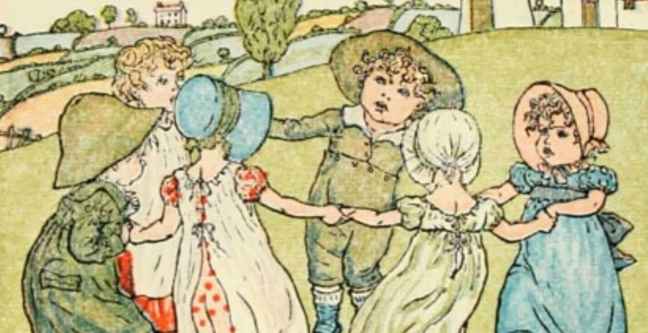
The rhyme first appeared in Nursery Rhymes of England, written by James Orchard Halliwell-Phillipps in 1842. Although similar games and rhymes are found in England, the Netherlands, and Scandinavia, this specific version refers to the women’s prison in Wakefield, England. The women’s punishment came in three stages. First, the women were separated into solitary confinement, and then forced into solitary labor. Finally, they were put in a communal facility. The rhyme refers to the prison’s exercise program. Each day, the women would be forced to dance with children around a mulberry tree in the yard. The second stanza refers to the educational program required of all women to train them to be responsible women. The tree referred to in the rhyme died in 2019.


About the Author

In the early 1990s, John Devoti had a midlife crisis. He did not want a motorcycle (those things are dangerous) or a new wife (his was very cute). Instead, he quit his auditing job and returned to school for his history doctorate. He wrote The Patriotic Business of Seeking Office: James K. Polk and the Patronage. It was not a bestseller. He taught college history for almost twenty years before retiring, and still dabbles by volunteering as a docent at the Roebling Museum in South Jersey. By the way, his wife and editor, Judy, is still very cute.

📖 John’s columns are collected in Tidbits of History: 25 Years of Historical Morsels — available on Amazon, Barnes & Noble, and at the Roebling Museum.
Tidbits of History — August 2026

Interesting Facts From Our Past — by John Devoti

The Tudor and Stuart period of the British monarchy (1485-1714) was a rich time for nursery rhymes. Often, opponents to the king or queen would compose these rhymes as disguised criticism of the monarchy.

Mary, Mary, quite contrary,
How does your garden grow?
With silver bells and cockleshells
And pretty maids all in a row!

One popular theory suggests this rhyme refers to Mary I, also known as "Bloody Mary," for her habit of killing Protestant ministers. After the reigns of Henry VIII and Edward VI, which promoted the Anglican Church, Mary, a Catholic, condemned anyone who subscribed to the newer religion. Anyone who disagreed with her contrary views would be planted in her "garden" or graveyard. Before that, the accused would be tortured with "silver bells" (corkscrews) or "cockleshells" (genital presses). Then the "pretty maids" (the condemned) would be lined up for beheading. Remember that the next time you say this cute little rhyme.

Three hundred twenty-five years ago, on August 4, 1701, the Great Peace of Montreal, ending the Beaver Wars between New France and the North American First Nations, was signed. The Beaver Wars were a sixty-year conflict that involved three European nations and two indigenous nations. Responding to European demand for beaver pelts, the Haudenosaunee, or Five Nations (Seneca, Cayuga, Onondaga, Oneida, and Mohawk), used guns supplied by first the Dutch and then the English to expand westward. Meanwhile, the Western Algonquians (Miami, Ottawa, and Ojibwe tribes), helped by their French allies, resisted the expansion. Eventually, the Algonquians settled in the west, in present-day western Ontario, Michigan, and Illinois. However, tired of the long struggle, the Haudenosaunee offered to negotiate a peace, which was worked out between the two nations and the French. With the agreement, many Algonquians could return to their homes along the Ohio River.

One hundred seventy-five years ago, on August 22, 1851, the yacht America won the first America’s Cup. The competition coincided with England’s Great Exhibition of 1851. Five members of the New York Yacht Club financed a new schooner designed to compete with England’s best. The ship sailed from the East River in New York to France, where it was repainted and repaired after the transatlantic journey. The owners then challenged the best British yachts to a race. No individual owner accepted, and America raced against fifteen yachts of the Royal Yacht Squadron around the Isle of Wight. Queen Victoria and Prince Albert watched from her royal yacht. The race was not close. When America rounded the island, Victoria asked, which boat was second. Her attendant replied, "There is no second." The second-place finisher, Aurora, was 22 minutes behind, and the third-place finisher was over an hour behind. Since then, the "America’s Cup" has been held periodically, with the New York Yacht Club successfully defending it until 1983, when it lost to an Australian team. The America’s Cup is the oldest trophy in organized sports. Since 1851, American teams have won 30 times, New Zealand 5 times, Switzerland 2 times, and Australia 1 time. The next scheduled challenge will be in Naples, Italy, with the defending champion, New Zealand. The challenger is still to be determined.

One hundred twenty-five years ago, on August 14, 1901, Gustave Whitehead flew the first powered airplane…or did he? Today, most historians credit the Wright brothers with the first flight in 1903. Whitehead was a Wright competitor. For years, he tested gliders, much as the Wrights did, and worked on a steam-powered engine. On August 18, the Bridgeport Sunday Herald reported that witnesses observed Whitehead take off in the Number 21 aircraft. The airplane flew a half mile about fifty feet above the ground and landed lightly. Whitehead also reported that he repeated the flight four times. So why is Whitehead not the "first in flight"? The only evidence of any of his flights is the eyewitnesses. They were either family members or Herald reporters, both groups with a stake in a positive report. No one thought to take pictures of any of the flights. Whitehead was never able to replay any of his flights before an unbiased group. Also, the airplane has been lost. With the Wright brothers, their first flight was witnessed by unbiased observers, photographs were taken, and the Wright Flyer now resides in the Smithsonian Air and Space Museum.

Finally,
Jack and Jill went up the hill
To fetch a pail of water.
Jack fell down and broke his crown,
And Jill came tumbling after.

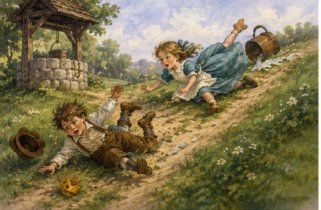
One theory holds that this rhyme refers to King Charles I’s use of what we call today "shrinkflation." The modern practice is most apparent when producers shrink the size of a product, such as a candy bar, while keeping the price the same. This way, the consumer supposedly does not notice that the price per unit actually went up. In 1625, Charles tried to raise taxes ("up the hill") on liquid standard measures of a "jack" (a quarter pint), and a "gill" (twice the volume of a jack), but Parliament rejected the proposed taxes. Instead, Charles reduced the standard volume of a jack, symbolized by a crown, and a gill. Thus, the jack fell, breaking the crown, and the gill followed.


About the Author

In the early 1990s, John Devoti had a midlife crisis. He did not want a motorcycle (those things are dangerous) or a new wife (his was very cute). Instead, he quit his auditing job and returned to school for his history doctorate. He wrote The Patriotic Business of Seeking Office: James K. Polk and the Patronage. It was not a bestseller. He taught college history for almost twenty years before retiring, and still dabbles by volunteering as a docent at the Roebling Museum in South Jersey. By the way, his wife and editor, Judy, is still very cute.

📖 John’s columns are collected in Tidbits of History: 25 Years of Historical Morsels — available on Amazon, Barnes & Noble, and at the Roebling Museum.
Tidbits of History — July 2026

Interesting Facts From Our Past — by John Devoti

Many nursery rhymes refer to past events, some of which, if parents knew their meanings, would never be taught to children. In the next few columns, I will talk about some of these rhymes and their origins. Remember that most of their origins are obscure, so the explanations I offer could easily be challenged, especially for the earliest examples.

London Bridge is falling down,
Falling down, falling down.
London Bridge is falling down,
My fair lady.

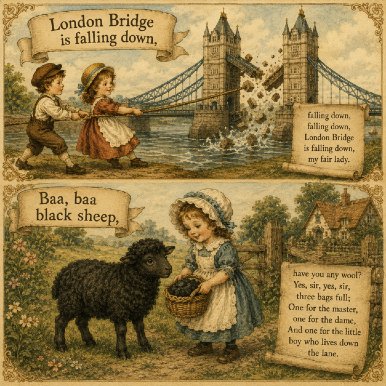
This rhyme could refer to several events. As you may know, the London Bridge has actually been rebuilt several times, the first as early as 43 CE. One bridge was built around 880 during the reign of Alfred the Great. That bridge was attacked by Vikings in 1014. Although the bridge was not destroyed, it may have been severely damaged, leading to the rhyme. The best evidence for this interpretation is a similar Scandinavian rhyme that emerged in the 1200s, referring to an attack by Olaf Haraldsson.

London Bridge is broken down. —
Gold is won, and bright renown.
Shields resounding,
War-horns sounding,
Hild is shouting in the din!
Arrows singing,
Mail-coats ringing —
Odin makes our Olaf win!

The British nursery rhyme did not appear in print until the 1700s, so the rhyme could refer to any number of fires or other incidents that happened on this bridge or subsequent bridges.

Baa, baa, black sheep,
Have you any wool?
Yes, sir, yes, sir,
Three bags full.
One for my master,
One for my dame,
And one for the little boy
Who lives down the lane.

This rhyme did not appear in print until 1731, but it may refer to a wool tax imposed by King Edward I of England in 1275. After returning from the Crusades, Edward needed funds to replenish the treasury. Black sheep were highly prized and worth more because the wool required no dyeing to make dark clothing. The rhyme refers to the tax, which awarded a third to the king (master), a third to the church (dame), leaving only a third for the commoners (the little boy), hardly enough to make a living. Other versions enforce that meaning with "none for the little boy who cries down the lane."

Three hundred fifty years ago, on July 30, 1676, Nathaniel Bacon issued the "Declaration of the People of Virginia," beginning Bacon’s Rebellion against the rule of Governor William Berkeley. Bacon is usually portrayed as an early rebel against the British Crown. However, the reality is not so cut-and-dried. Although the rebellion is usually portrayed as a struggle between poor farmers and the landed aristocracy, Bacon himself was a member of that aristocracy, a cousin of Governor William Berkeley, who arrived in Virginia in 1675 with a large bankroll and a substantial land grant from the governor. In March 1676, the House of Burgesses declared war on the indigenous population, but most of the Burgesses wanted a defensive war to protect western planters, not a war to take land. Bacon saw the war differently. He asked for a commission to lead troops against the western tribes. He was denied that commission, but still assembled a band of farmers and began raiding indigenous villages. The royal government labeled him a traitor, but he was elected to the House of Burgesses by a western county.

When he arrived in Jamestown, the House would not seat him until he renounced his actions, which he did. He again asked for a commission and was denied. He then issued his "Declaration of the People" against the rich landowners, more specifically Berkeley, and was again labeled a rebel. In September, he and his followers started a fire in Jamestown, destroying much of the capital city. However, in October, Bacon died of dysentery. At that time, the king issued a royal proclamation to put down the rebellion, which lasted a few more months. Berkeley was removed as governor and recalled to England, where he died the next year.

Fifty years ago, on July 2, 1976, North Vietnam annexed South Vietnam. The United States ended American involvement in the Vietnam War with the signing of the Paris Peace Accords in January 1973. President Nixon promised to support South Vietnam in the event of new northern aggression. Despite this, North Vietnamese troops (NVA) began a new attack against the south at the end of 1973. Because of the American public’s war fatigue and the beginning of the Arab Oil Embargo, Nixon decided not to send American troops. Emboldened, the NVA started a major final offensive in 1975, occupying Saigon on April 30, effectively ending the war. A little over a year later, the North Vietnamese officially absorbed South Vietnam, forming the Socialist Republic of Vietnam, and renaming Saigon, Ho Chi Minh City.

Fifty years ago, on July 4, 1976, Israeli commandos raided a hijacked airliner at Entebbe airport in Uganda, rescuing all but four of the passengers and crew. On June 27, four Palestinian terrorists, armed with guns and hand grenades, took over the aircraft and forced Captain Michel Bacos to fly to Uganda. When they arrived, the hijackers released over 250 passengers who were not Israeli or Jewish, leaving a little over 100 passengers and crew, who were held in a terminal. Soon after the hijacking, the Israeli government, led by Prime Minister Yitzhak Rabin and Defense Minister Shimon Peres, directed military and intelligence teams to gather information and plan a rescue operation. They were aided by a Ugandan engineer who supplied plans for the airport. The plan was to approach the plane in a motorcade similar to one used by Ugandan dictator Idi Amin. The Israelis did not inform the Ugandan government of the attack and expected resistance from Ugandan forces stationed at the airport. The raid, commanded by Yonatan Netanyahu, brother of the current Israeli prime minister, was compromised when an Ugandan soldier challenged the motorcade. The resulting gunfire alerted the hijackers, and a gun battle ensued. Israeli commandos stormed the terminal, killing the hijackers and engaging Ugandan troops who responded to the attack. Three hostages were killed during the rescue operation. A fourth hostage, Dora Bloch, who had been hospitalized before the raid, was later murdered by Ugandan authorities. Between 20 and 45 Ugandan soldiers were killed, according to various accounts. The only Israeli fatality was Netanyahu. The operation was renamed Operation Yonatan in his honor.

Finally,
"Rub-a-dub-dub
Three men in a tub,
And who do you think they be?
The butcher, the baker, the candlestick maker,
And all of them out to sea."

The modern version of this nursery rhyme was first published in the late 1700s in James Hook’s A Christmas Box. However, the rhyme’s oral tradition dates back to the 1300s. When reading the latest edition, you might wonder how three craftsmen might get stuck in a tub in the middle of the sea. When you look at the original non-bowdlerized version, the meaning becomes clearer:

Hey! rub-a-dub, ho! rub-a-dub, three maids in a tub,
And who do you think were there?
The butcher, the baker, the candlestick-maker,
And all of them gone to the fair.

Today, many supermarket tabloids love to headline scandals involving Hollywood celebrities or Washington politicians. This is not new. In the Middle Ages, only aristocrats could afford tabloids, let alone read them. They would really love hearing how their local suppliers were caught at the fair in a nudie show watching three naked "maids" bathing.


About the Author

In the early 1990s, John Devoti had a midlife crisis. He did not want a motorcycle (those things are dangerous) or a new wife (his was very cute). Instead, he quit his auditing job and returned to school for his history doctorate. He wrote The Patriotic Business of Seeking Office: James K. Polk and the Patronage. It was not a bestseller. He taught college history for almost twenty years before retiring, and still dabbles by volunteering as a docent at the Roebling Museum in South Jersey. By the way, his wife and editor, Judy, is still very cute.

📖 John’s columns are collected in Tidbits of History: 25 Years of Historical Morsels — available on Amazon, Barnes & Noble, and at the Roebling Museum.
Tidbits of History — June 2026

Interesting Facts From Our Past — by John Devoti

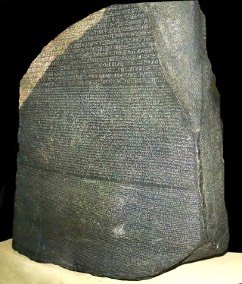
For centuries, tourists did not visit Egypt. Several of the Crusades landed at the Nile, but their main goal was the conquest of the Holy Land, not to learn lessons from the ancient lands. Interest in Egypt revived with Napoleon Bonaparte’s Egyptian campaign. Although his main goal was conquest, Bonaparte also brought a group of scientists and historians to explore the region. The second goal of his mission was much more successful, and several artifacts were returned to France. These artifacts included a large basalt slab found near Rosetta in the Nile Delta, inscribed in Hieroglyphics, Greek, and Demotic (a form of simplified Hieroglyphs). The "Rosetta Stone" remained untranslated until 1818, when French linguist Jean-François Champollion (1790-1832) compared the inscription with records from other temples. He looked at the pharaohs’ names written in hieroglyphic cartouches (rope-shaped circles containing their names). He used known pronunciations and spellings of the kings to decipher the words and explain the phonetics of the Egyptian language. For example, he saw that the first syllable of Ramses was represented by the sun disc, which gave him the word for "sun" and its pronunciation (Rah). He presented his findings in Paris in 1824, and his first book, Précis du système hiéroglyphique des anciens Égyptiens, was published that year. He finally visited Egypt in 1827 and had the chance to see the writing firsthand. He wrote notes for a grammar guide and dictionary up until his death, and the book was published posthumously by his brother.

Auguste Mariette (1821-1881) became interested in Egyptology when he inherited the papers of a cousin, Nestor L’Hôte, who had traveled with Bonaparte’s expedition and had made drawings for Champollion during his efforts to translate hieroglyphics. In 1850, he visited Egypt and began researching the Serapeum of Memphis, where he discovered the mummified remains of the Apis bulls, sacred animals kept near the temple of Apis, a creator god. After the bulls died, they were associated with the gods Sokar and Osiris, and were given full burial rites. Mariette found the tombs in disrepair and returned them, as closely as possible to their original state. Once he finished, the Serapeum became one of the major Egyptian tourist destinations.

Two hundred fifty years ago, on June 12, 1776, Virginia adopted the Declaration of Rights, an early constitution, less than a month before the Declaration of Independence. The Declaration of Rights established the framework for a state government and guaranteed several rights to citizens, including freedom of speech and religion. It also provided a section that allowed people to reform, alter, or abolish governments failing to act in the public interest. Ironically, in a colony with thousands of enslaved, there was a section stating "That all men are by nature equally free and independent and have certain inherent rights, of which, when they enter into a state of society, they cannot, by any compact, deprive or divest their posterity; namely, the enjoyment of life and liberty, with the means of acquiring and possessing property, and pursuing and obtaining happiness and safety." James Madison, a delegate to the Constitutional Convention, drew on many of those provisions in the US Constitution and later in the Bill of Rights.

Two hundred years ago, on June 22, 1826, Simón Bolívar convened the Pan-American Congress in Panama City. Beginning in 1810, many colonies in Central and South America revolted against their colonial rulers. Bolívar hoped to unite the new countries into a Latino confederation along the lines of the United States. The Congress was evenly split between those who favored Bolívar’s idea and those who preferred a group of nation-states similar to those in Europe. Unfortunately, larger states like Argentina and Brazil feared that following Bolívar’s dream would weaken them. The Congress collapsed, dooming many of the states to decades of border disputes and internal revolutions.

One hundred fifty years ago, on June 6, 1876, a group of physicians, headed by Édouard Séguin, founded the Association of Medical Officers of American Institutions for Idiotic and Feebleminded Persons. Born in France, Séguin opened a school for the developmentally challenged in Paris in 1840. During the social upheaval of 1848, he emigrated to America, first to Ohio, then to New York, and established schools in various cities. He founded the Association with the goal of training challenged youths to develop intellectual and physical skills so they could live independent lives. The Association still exists but has changed its name over the years to the American Association for the Study of the Feebleminded, the American Association on Mental Deficiency, the American Association on Mental Retardation, and, finally, the American Association on Intellectual and Developmental Disabilities in 2007.

One hundred fifty years ago, on June 17, 1876, Sioux chief Crazy Horse and General George Crook met at the Battle of the Rosebud near Rosebud Creek in Montana territory. Chiefs Crazy Horse and Sitting Bull and their followers, a mixture of Lakota Sioux, Cheyenne, and Arapaho, attacked Crook while his troops were camped by the creek. Crook’s allies, 262 Crow and Shoshone warriors, counterattacked. While their group was decimated, the scrimmage allowed Crook’s troops time to escape. A week later, on June 25, Troops under the general command of Lieutenant Colonel George Custer were not so lucky, as the three columns of his Seventh Cavalry met the same army, with two of the columns facing heavy losses, and Custer’s column was wiped out at the Battle of the Little Bighorn.

Finally, not all the great Egyptologists were men. Amelia Edwards (1831-1892) took a sightseeing trip with a friend in 1873, and they decided to visit Egypt, a trip that changed her life. Already an accomplished writer, she published A Thousand Miles up the Nile, her best-selling book. Today, tourists see the cleaned-up Egyptian monuments. Edwards saw them: the Sphinx half-buried, and the temple and tombs filled with rubble. After her return in 1874, she wrote her account and began writing reviews and articles on Egyptology. She contacted Auguste Mariette to propose using public subscriptions to support his restoration work. She founded the Egypt Exploration Fund in 1882, shortly after Mariette’s death, to continue his work. Today, the fund lives on as the Egypt Exploration Society.


About the Author

In the early 1990s, John Devoti had a midlife crisis. He did not want a motorcycle (those things are dangerous) or a new wife (his was very cute). Instead, he quit his auditing job and returned to school for his history doctorate. He wrote The Patriotic Business of Seeking Office: James K. Polk and the Patronage. It was not a bestseller. He taught college history for almost twenty years before retiring, and still dabbles by volunteering as a docent at the Roebling Museum in South Jersey. By the way, his wife and editor, Judy, is still very cute.

📖 John’s columns are collected in Tidbits of History: 25 Years of Historical Morsels — available on Amazon, Barnes & Noble, and at the Roebling Museum.
Tidbits of History — May 2026

Interesting Facts From Our Past — by John Devoti

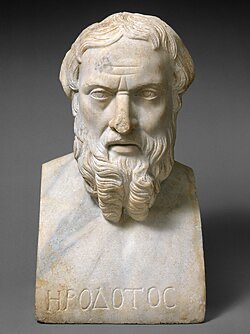
Some of you have probably done the touristy thing and visited Egypt. For others, such a visit is on the bucket list (like me). But people visiting Egypt to see the sights is not a new endeavor. Visitors have gawked at the pyramids, the temple of Karnak, or Abu Simbel. One of the earliest visitors was the Greek historian Herodotus (c. 484-c. 425 BCE). Born in Asia Minor (Modern-day Turkey), Herodotus wrote a collection of nine volumes known as The Histories, of which Volume II covers Egypt. He probably visited sometime between 450 and 430 BCE. Like most tourists, he documented his observations of the ancient monuments, but he also engaged with the locals to gain insight into their everyday lives. He marveled at the customs that differed from those in Greek culture, including the more public roles of women, their shopping in the markets, and their roles as priests, but only for female deities. While some of his claims, especially those derived from conversation, were inaccurate—such as the idea that women could only serve as priests for female gods—he accurately described various practices like mummification and the agricultural cycles tied to the annual floods of the Nile.

About four centuries later, the Sicilian Diodorus Siculus (fl. 1st century BCE) followed in Herodotus’ footsteps. Egypt appears in the first volume of Siculus’ Bibliotheca Historica, an effort to chronicle human history up to Caesar’s conquest of Gaul, which eventually reached forty volumes. While visiting Egypt around 60 BCE, Diodorus emphasized that Egyptian culture was more barbarian than Greek and Roman cultures. In his book, he commonly describes Egyptian achievements by starting with "Egyptians say" or "Egyptians claim," while rarely agreeing with them. However, he does describe the history of the Egyptians and the development of their multi-deity religion. He also discusses their agriculture, beginning as hunter-gatherers and eventually developing modern planting techniques based on the Nile River’s seasonal flooding.

Four hundred seventy-five years ago, on May 12, 1551, Charles V of Spain issued a royal decree establishing the University of San Marcos in Lima, Peru. San Marcos is the oldest university in the Americas, predating the University of Mexico by four months. In 1549, Friar Tomás de San Martín traveled to Spain to petition the king to establish a center of higher learning modeled on the University of Salamanca. Due to ill health, Friar Tomás never returned to Peru but sent Charles’ decree back to Lima. The school itself was opened in 1553 and run by Dominican monks for two decades. In 1571, King Philip II ordered the University’s secularization, and in 1574, students and professors established an independent institution. That same year, the Faculty of Law was established, and the school’s official name was changed to The Royal and Pontifical University of San Marcos of Lima. Soon, the university launched schools of the Arts, Theology, Sacred Scripture, Canon Law, and Medicine.

One hundred seventy-five years ago, on May 1, 1851, Queen Victoria opened the Great Exhibition at the Crystal Palace in London. During the 1840s, the British Society of Arts held small exhibitions of manufactured goods. Victoria’s consort, Prince Albert, became a patron of the society. He knew about larger French exhibitions and resolved to create one on an even grander scale.

In January 1850, Parliament established a Royal Commission to build a "Great Exhibition of the Works of Industry of All Nations." After rejecting many designs for the Exhibition as too expensive or impractical, the Commission settled on a glass-and-steel structure designed by Joseph Paxton, known for his designs of enormous greenhouses. To construct the Palace, Paxton chose Fox, Henderson & Company, the builders who built his earlier glasshouse designs. The final building covered 18 acres, incorporated over 3,000 columns, and used over 2,000 girders. The fair would feature works from 34 nations and would host over 14,000 exhibitors. Six million people would eventually visit the Crystal Palace before it closed in October. The exhibition made a £186,000 profit (about £20 million today) and inspired dozens of similar fairs around the world.

One hundred seventy-five years ago, on May 29, 1851, Sojourner Truth delivered her "Ain’t I a Woman?" speech at the Women’s Rights Conference in Akron, Ohio. Truth was born Isabella Baumfree in New York in 1797. She worked as a slave and in 1815, was forced to marry a fellow slave named Thomas, with whom she had five children. In 1827, New York passed the New York Anti-Slavery Law of 1827, but her owner refused to abide by it, so Truth simply left the estate. She later experienced a religious conversion and began preaching, using the name Sojourner Truth. Actually, Truth never said, "Ain’t I a woman?" The speech most quoted today was printed in 1863 and altered much of what Truth originally said. Even though she was illiterate, Truth did not speak in minstrel dialect. For example, the ending was printed in 1863 as, "If de fust woman God ever made was strong enough to turn de world upside down all her one lone, all dese togeder ought to be able to turn it back and git it right side up again, and now dey is asking to, de men better let ’em." A probably more accurate version was published in the Anti-Slavery Bugle (Salem, Massachusetts) soon after the conference. That speech ended with, "But the women are coming up, blessed be God, and a few of the men are coming up with them. But man is in a tight place, the poor slave is on him, woman is coming on him, and he is surely between a hawk and a buzzard."

Finally, Strabo (c. 64-c. 24 CE) was another ancient Egyptian tourist. He traveled to Egypt in about 27 BCE with the Roman Prefect Aelius Gallus and described his visit in Book 17 of his 17-volume work, Geography. In the book, he described the Nile and the irrigation systems that watered crops along its banks. He wrote about the customs, religious beliefs, and art of the Egyptian people. He also included commentary on the renowned monuments in Egypt, discussing whether they lived up to their reputations. He decided that the tombs in the Valley of the Kings, the boat trips at the Philae Temple complex near present-day Aswan, and the Pyramids were definitely worth the trip.


About the Author

In the early 1990s, John Devoti had a midlife crisis. He did not want a motorcycle (those things are dangerous) or a new wife (his was very cute). Instead, he quit his auditing job and returned to school for his history doctorate. He wrote The Patriotic Business of Seeking Office: James K. Polk and the Patronage. It was not a bestseller. He taught college history for almost twenty years before retiring, and still dabbles by volunteering as a docent at the Roebling Museum in South Jersey. By the way, his wife and editor, Judy, is still very cute.

📖 John’s columns are collected in Tidbits of History: 25 Years of Historical Morsels — available on Amazon, Barnes & Noble, and at the Roebling Museum.
Tidbits of History — April 2026

Interesting Facts From Our Past — by John Devoti

Last month, I described the anti-Catholic forgeries that encouraged American Catholics to reject the English language, public schools, and even to kill non-Catholic heathens. There was also an antisemitic version called the Protocols of the Elders of Zion. The first version of the Protocols was printed as a serial in the Znamia (The Banner) in St. Petersburg, Russia. It appears the Protocols were a reworking of Dialogue aux enfers entre Machiavel et Montesquieu (The Dialogue in Hell Between Machiavelli and Montesquieu) by Maurice Jody, first written in 1864 as a criticism of Napoleon III of France’s authoritarian tactics. Russian secret police took the treatise and transformed it into an antisemitic diatribe. The main argument was that Jews were running the world banking system, using it to control the world.

The Protocols first appeared in Germany in 1919, but soon arrived in America. Henry Ford had them translated and published in serial form as The International Jew in the Dearborn Independent (Michigan) in 1920, and in book form in four volumes from 1920 to 1922. Although The Times of London newspaper exposed the Protocols as fake, as with most conspiracy theories, believers simply said that the denials only proved their truth. Adolf Hitler used them to justify his "Final Solution," and many people in Europe and America still refer to them. After the 9/11 attacks and during the COVID-19 pandemic, many conspiracy theorists claimed the Protocols exposed the Jewish forces behind these catastrophes.

Seventy-five years ago, on April 17, 1951, the Peak District in central England became the United Kingdom’s first National Park. The Peak District has been inhabited by humans since they first arrived about 10,000 years ago. The area lies at the southern end of the Pennine Mountain chain in central England and is one of the country’s scenic wonders. It also has a long history of agriculture, and, with the coming of the Industrial Revolution, saw the development of coal and iron mining, and cotton and ironworking mills. After World War II, several conservation groups, inspired by America’s national parks, began petitioning Parliament to create British parks. Reports by John Dower (1945) and Arthur Hobhouse (1947) identified several areas for public use, and the 1949 National Parks Act created the establishment framework. Today, Great Britain has fifteen national parks.

Fifty years ago, on April 4, 1976, the April Fifth Movement led to the first Tiananmen incident in China. Many remember the major anti-Communist protests of 1989 in Tiananmen Square, but not the earlier protest. In January 1976, Chinese Premier Zhou Enlai died. Possibly more popular than the Communist Party’s founder, Mao Zedong, Zhou represented the party’s more moderate wing. Radical leaders in the party did not want Zhou’s death remembered, so they took down any memorials to the premier. The people decided to save any memorials for the Qingming festival, when all who had died that year would be celebrated. The day before the festival, on April 4, over a million people brought wreaths and flowers to Tiananmen Square. They also passed out pamphlets and handbills criticizing the radicals. Overnight, authorities removed all evidence of the memorial. Thousands returned to the square and angrily demanded the return of the wreaths. The crowd turned over a police vehicle and stormed government buildings. The Politburo decided to forcibly remove the protesters. That evening, police stormed the square and beat any remaining protesters. By the next day, the protesters were gone. In response to the protest, the radical faction removed Zhou’s protege Deng Xiaoping from the Politburo. However, after Mao’s death later that year, Deng returned and, by 1978, had consolidated full power. Ironically, Deng’s moderate, although still authoritarian, reforms were not enough for many, leading to the second, much more violent Tiananmen protest in which Deng ordered an extreme military response, killing hundreds.

Fifty years ago, on April 4, 1976, British Parliament member John Stonehouse resigned from the Labour Party after being arrested. In 1969, Great Britain’s Security Service, MI5, accused Stonehouse of spying for Czechoslovakia. Insufficient evidence helped Stonehouse avoid charges, and in 1980, Prime Minister Margaret Thatcher classified the files. In November 1974, Stonehouse faked his death by leaving clothes on a Miami beach, suggesting that he had committed suicide. In reality, he traveled to Australia with his mistress. However, bank accounts he used to cover his tracks and fund his new life came under suspicion and were traced back to Stonehouse. He was arrested in December 1974 but did not resign from the party until more than a year later. Stonehouse continued to serve in Parliament as a member of the English National Party until he resigned in August 1976 following his conviction. Although he never returned to Parliament, Stonehouse did profit from his notoriety, publishing three novels and giving several TV interviews.

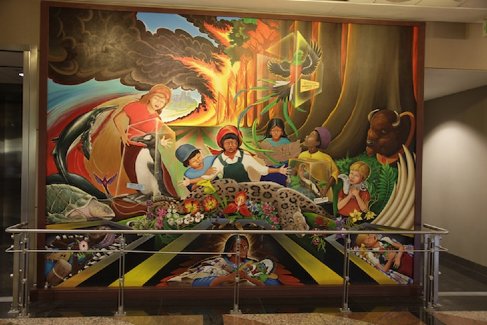
Finally, many of you have probably traveled to Denver International Airport. However, did you know that some believe this airport is a hub for Masonic, Illuminati, and extraterrestrial activity? It’s even claimed to be the headquarters for a global genocide that will trigger the New World Order. Questions about the airport began during its planning phase. Why did Denver need a new airport with fewer runways than the existing Stapleton Airport? What are the eight levels of underground tunnels leading nowhere? Why are the runways laid out in the pattern of a swastika? There are many theories, but no facts to support those theories. As with many conspiracy theories, these claims are based on deliberate misrepresentation of actual facts. For example, inside the finished terminal, two murals located by the baggage claim depict images of conflict and stormtroopers. These murals, titled "In Peace and Harmony with Nature" and "Children of the World Dream of Peace," were actually designed to convey messages of optimism. The first mural shows children ultimately rebuilding the land, while the second depicts a scene of peaceful harmony overcoming war. But one theory suggests that these murals show children being forced to work as slaves below the airport for reptilian extraterrestrials (possibly using those extra tunnels). As is typical with many conspiracy theories, proponents never explain why no evidence of these extraterrestrials exists, despite claims of thousands of child slaves working beneath our feet, or why the aliens would so openly display their presence through public murals.


About the Author

In the early 1990s, John Devoti had a midlife crisis. He did not want a motorcycle (those things are dangerous) or a new wife (his was very cute). Instead, he quit his auditing job and returned to school for his history doctorate. He wrote The Patriotic Business of Seeking Office: James K. Polk and the Patronage. It was not a bestseller. He taught college history for almost twenty years before retiring, and still dabbles by volunteering as a docent at the Roebling Museum in South Jersey. By the way, his wife and editor, Judy, is still very cute.

📖 John’s columns are collected in Tidbits of History: 25 Years of Historical Morsels — available on Amazon, Barnes & Noble, and at the Roebling Museum.
Tidbits of History — March 2026

Interesting Facts From Our Past — by John Devoti

One source of conspiracy theories has always been religious xenophobia. While anti-Semitism and Islamophobia frequently rear their ugly heads, another common prejudice has been against Catholicism. For example, one theory posits that a small group of wealthy people (often Jewish) is running the world as the Illuminati. Interestingly, the Illuminati once did exist. In 1776, Adam Weishaupt, a professor of law in Bavaria, founded the Order of the Illuminati to combat the censorship of the Catholic Church and the government. He envisioned a secret society that would foster free speech and thought. Starting with five law students, the order grew to over two thousand members within a decade. Weishaupt organized the group along lines similar to the Freemasons, with lodges and member ranks. Both Catholic and Protestant authorities soon began working to end the society. In 1784, Karl Theodor, Duke of Bavaria, banned all secret societies. His police raided the homes of several members, including a top diplomat and Weishaupt’s second-in-command, Xavier von Zwack. Zwack’s belongings included secret documents, including a calendar, lodge locations, and bylaws. With these revelations, the society slowly dissolved. Despite what many believe today, the Illuminati have not existed for over two centuries.

Often, conspiracy theories suggest that certain groups target children for sacrifice, exploitation, or sale. For years, the Ursuline convent in Somerville, Massachusetts, had been subject to such rumors. It did not help that women ran the convent without male assistance. Stories told of nuns having illicit sex with priests. Pregnancies would result, so what happened to the children? Theorists claimed the nuns buried them in the convent’s sub-basement; never mind that a sub-basement did not exist. On July 28, 1834, Elizabeth Harrison fled the convent. She taught music there for twelve years but became upset with the Mother Superior. The next day, the Bishop visited her, calming her down, and Harrison returned willingly. However, rumors grew. Newspapers reported on Harrison’s mysterious flight, her "kidnapping," and her return to the convent. Initially, neighbors were concerned for Harrison’s well-being, but soon, talk began of her rescue. The Mother Superior took several town leaders on a tour of the convent on August 11, and the leaders left convinced that Harrison was happy and willing to stay. They planned to publish a glowing report in the next morning’s newspaper. But, before that happened, a crowd gathered and attacked the convent. They evacuated the nuns and students, then ransacked it, looking for hidden crypts with graves of the innocent. Not finding any, the mob burned the convent to the ground. They seemed to believe they were helping the nuns by destroying their home. One of the men told a nun, "We’ve spoiled your prison for you. You won’t never have to go back no more." Several men were arrested and tried for the arson, but acquitted. Despite a general outcry, even among Protestant clergy, the state legislature voted overwhelmingly against replacing the convent.

Two hundred fifty years ago, on March 3, 1776, the US Marines made their first amphibious landing at Nassau in the Bahamas. With the Continental Army short of munitions, the Continental Congress charged a naval expedition under Commodore Esek Hopkins to patrol the Virginia and North Carolina coast to raid British shipping for guns and powder. Hopkins decided to exceed his orders. He heard of a cache of weapons and gunpowder in the Bahamas and planned a raid on Nassau. Bahamas’ Royal Governor Montfort Browne received a warning about the raid, but ignored it, and Nassau did not shore up the port’s defenses. The commodore initially wanted a direct assault on the city, but Browne, upon seeing the small fleet, reinforced the city’s defenses, and Hopkins aborted the assault. A second assault near Fort Mantagu succeeded, and fifty sailors and two hundred marines took the fort. The commander of the force, Samuel Nicholas, decided to wait the night before pushing his advantage. Browne took the opportunity to move most of the munitions further inland. Hopkins’s men took the munitions left behind and brought them to Connecticut. Despite the success, Hopkins was reprimanded for exceeding his orders and, two years later, was forced to resign from the Navy.

Two hundred fifty years ago, on March 9, 1776, Adam Smith published The Wealth of Nations, which revolutionized modern economics. In 1759, Smith published The Theory of Moral Sentiments, which argued that, despite his selfish nature, man had the capacity to care for others. In 1763, Smith met Francois Quesnay, who argued that what farmers produced was the source of a nation’s wealth, not gold and silver (what Quesnay called "Physiocracy"). Influenced by that theory, Smith began researching modern economies and those of ancient Rome. He finally published his masterpiece in 1776. The full title was An Inquiry Into the Nature and Causes of the Wealth of Nations. He criticized mercantilism, the prevailing economic theory that held that the government should direct colonies to supply raw materials and buy finished goods from the mother country. Instead, he suggested the government should stay out of business and allow the market to balance itself through enlightened self-interest. He argued that free markets and free trade, without government interference, would benefit both owners and workers by enabling them to prosper. These theories became the foundation of modern capitalism.

One hundred twenty-five years ago, on March 2, 1901, the US Congress passed the Platt Amendment. A central goal of the American declaration of war against Spain (1898) was Cuban independence. After Cuba finalized its constitution in 1900, Secretary of War Elihu Root drafted a series of guidelines for United States-Cuban relations. Senator Orville Platt of Connecticut introduced the guidelines as an amendment to the Army Appropriations Bill. The Amendment stipulated that the United States could buy or lease land for military bases. It also defined circumstances under which the United States could intervene in Cuban internal affairs if the Cuban government passed laws that interfered with life, liberty, or property. The United States used the Amendment as justification for military incursions in 1906, 1912, 1917, and 1920. In 1934, President Franklin Roosevelt announced his "Good Neighbor Policy" toward Central and South America, effectively repealing the Platt Amendment. The only remaining remnant of the Amendment is the American base at Guantánamo Bay.

One hundred twenty-five years ago, on March 23, 1901, the US Army captured Emilio Aguinaldo, the first and only president of the First Philippine Republic. The Spanish-American War did not end with the Spanish defeat in 1898. Filipino insurgents rejected possession by the United States of the Philippines. Initially, the rebels tried conventional warfare against the American army and soon realized the folly of that effort. They shifted to guerrilla tactics against the US forces and elected Aguinaldo as their president and leader of their small army. Aguinaldo had previously led the Filipinos in their revolution against Spain in 1896, and continued to fight both during the Spanish-American War and against the Americans afterward. General Frederick Funston commanded the American force that captured Aguinaldo. Funston volunteered to work with Cuban rebels in 1896 and, upon the Declaration of War, was assigned to the Philippines. After the Spanish War, Funston remained in the country and led the force tracking Aguinaldo. Once Funston captured him, the war quickly ended. On April 19, Aguinaldo issued a proclamation calling for the rebels to surrender. Despite the official end to the insurrection, sporadic fighting continued for several more years. The United States would finally grant Philippine independence in 1946.

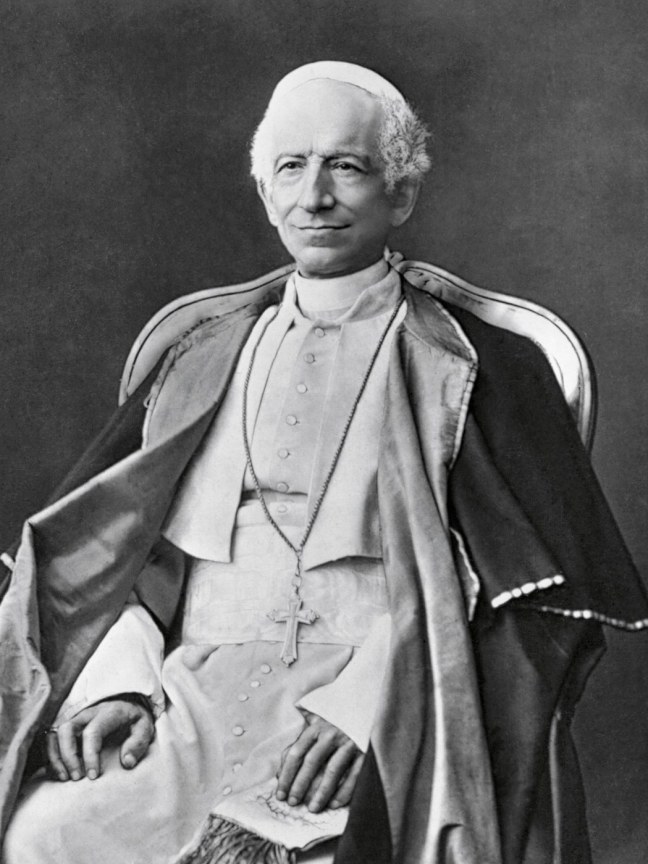
Finally, in 1893, two pamphlets, "Instructions to the Catholics. Platform of the Papal Party as Laid Down by the Pope," and excerpts from a papal encyclical from Pope Leo XIII appeared. In the "Instructions," Catholics were told that only the Pope can tell people how to think. It criticised the English language for spreading unorthodox views, and suggested any system that taught more than the Roman catechism was unnecessary. Any public school system in a Protestant nation should be destroyed. The encyclical went even further. It said that Catholics were relieved of any responsibility to the United States and that "it will be the duty of the faithful to exterminate all heretics found within the jurisdiction of the United States." In case you haven’t guessed, both of these documents were forgeries. In 1887, Henry Francis Bowers formed the American Protective Association (APA). By the turn of the twentieth century, the Catholic population had risen from 5% before the Civil War to 17%, and fear of a Catholic takeover of American institutions was rampant. By 1893, when the forgeries were released, the APA had 70,000 members. Within a year, the membership approached half a million, with the bulk of its membership in the conservative Midwest and Plains states. The popularity of the two pamphlets grew so much that Protestant newspapers began publishing editorials identifying them as forgeries. Despite these articles, about half of the APA’s membership believed they were genuine, and many others who thought they were forgeries still argued that the documents expressed actual Catholic teachings. Although several Republican politicians agreed with the APA, the party generally condemned it, and by the mid-1890s, many Republican leaders opposed the group. By 1906, when Bowers was reelected president of the APA, the organization had become irrelevant, and other organizations like the new Ku Klux Klan, reformed in 1915, took over leadership of anti-Catholic sentiment.


About the Author

In the early 1990s, John Devoti had a midlife crisis. He did not want a motorcycle (those things are dangerous) or a new wife (his was very cute). Instead, he quit his auditing job and returned to school for his history doctorate. He wrote The Patriotic Business of Seeking Office: James K. Polk and the Patronage. It was not a bestseller. He taught college history for almost twenty years before retiring, and still dabbles by volunteering as a docent at the Roebling Museum in South Jersey. By the way, his wife and editor, Judy, is still very cute.

📖 John’s columns are collected in Tidbits of History: 25 Years of Historical Morsels — available on Amazon, Barnes & Noble, and at the Roebling Museum.
Tidbits of History — January 2026

Interesting Facts From Our Past — by John Devoti

One complaint about the Internet is that it promotes all kinds of conspiracy theories. However, conspiracy theories are not a modern invention. They have been around for centuries, echoing back to when Romans complained that Nero fiddled while Rome burned—although the violin was actually invented centuries later, and Nero actually worked hard to save the Romans.

When I was teaching, I often devoted a section of my course to exploring conspiracy theories. For an assignment, I asked students to either prove or debunk a common conspiracy theory. Almost all of the students tried to support a theory. They argued, for instance, that Bigfoot roamed from Washington to Florida, yet no one has ever hit one on the interstate highways. Similarly, they claimed multiple shooters assassinated JFK, and suggested that the government faked the autopsy, ignoring overwhelming eyewitness accounts, including several who saw Oswald take the shots, and that Lyndon Johnson commissioned the Warren Commission to validate a conspiracy rather than to establish Oswald’s guilt.

So what do I mean by the term "conspiracy theory?" I am not denying that conspiracies exist. After all, several people did conspire to kill Lincoln and several other government officials. Members of Al Qaeda conspired to destroy the Twin Towers, the Pentagon, and another government building. A conspiracy theory, however, is a belief that a group has committed a crime despite all evidence to the contrary. Proponents of these theories cite contradictory evidence as proof that their beliefs are correct, claiming that this evidence shows that someone is hiding the actual story. For example, some theorists argue that the government hijacked the planes in the 9-11 attacks despite clear visual evidence showing the actual hijackers. They also allege that the towers were imploded, ignoring the fact that building demolition requires months of preparation to lay explosives, not to mention that the two towers were five times the size of any previous structures destroyed in such a manner. Of course, you may agree with some conspiracy theories. No problem. However, when dealing with a contested theory, check several independent sources and look at the evidence they present. At the very least, you will know what you are arguing against.

One hundred twenty-five years ago, on January 1, 1901, the British territories of New South Wales, Queensland, Victoria, South Australia, Tasmania, and Western Australia federated as the Commonwealth of Australia. By the nineteenth century, the six British colonies in Australia had formed their own autonomous governments, resulting in separate laws, taxes, railway gauges, postage stamps, and other conflicting policies. In 1880, the Australian Natives’ Association, which ironically, only included white men, began advocating for a united Australia, which also included New Zealand. In 1889, New South Wales (NSW) Premier Sir Henry Parkes called for a unified government in a speech published throughout Australia. Conventions held in 1891 and 1897 debated the structure of the new federation. Australians voted on the resulting Constitution Bill, which took two separate votes for approval. On July 5, 1900, the British Parliament passed the bill, and the federation was born on New Year’s Day 1901.

Finally, there have been rare instances when conspiracy theories have proven true. Remember, conspiracies depend on people to keep secrets, often for decades. As Benjamin Franklin famously said, "Three can keep a secret, if two of them are dead." For these conspiracies to remain hidden, a significant number of people must stay silent, which almost never happens. For example, take the Tuskegee Study. For years, African Americans voiced concerns that government scientists were deliberately harming black men and studying the results. The "Tuskegee Study of Untreated Syphilis in the Negro Male" began in 1932, when the United States Public Health Service (USPHS) chose a group of men with syphilis in Macon County, Georgia, to study the long-term effects of the disease. When effective treatments, such as penicillin, became available, the scientists refused to treat the subjects, arguing that black men did not trust science. Eventually, the study also included women and children. The control group received treatments that often included poisons like arsenic and mercury, while the test subjects received no treatment. In 1947, the control patients began receiving antibiotics, while the others remained untreated. Peter Buxton exposed the unethical study in 1972. By that time, two-thirds of the subjects had died, and forty wives and nineteen children had become infected. In response to Buxton’s revelations, Congress passed the National Research Act in 1974, requiring informed consent for all scientific studies. One conspiracy theory about the study persists to this day: that the scientists intentionally infected the subjects. However, there is no evidence to support this claim, and the scientists were rigorous in their record-keeping. The study’s developers picked Macon County specifically because of its high syphilis rate, making intentional infection unnecessary.


About the Author

In the early 1990s, John Devoti had a midlife crisis. He did not want a motorcycle (those things are dangerous) or a new wife (his was very cute). Instead, he quit his auditing job and returned to school for his history doctorate. He wrote The Patriotic Business of Seeking Office: James K. Polk and the Patronage. It was not a bestseller. He taught college history for almost twenty years before retiring, and still dabbles by volunteering as a docent at the Roebling Museum in South Jersey. By the way, his wife and editor, Judy, is still very cute.

📖 John’s columns are collected in Tidbits of History: 25 Years of Historical Morsels — available on Amazon, Barnes & Noble, and at the Roebling Museum.

Tidbits of History — December 2025

Interesting Facts From Our Past — by John Devoti

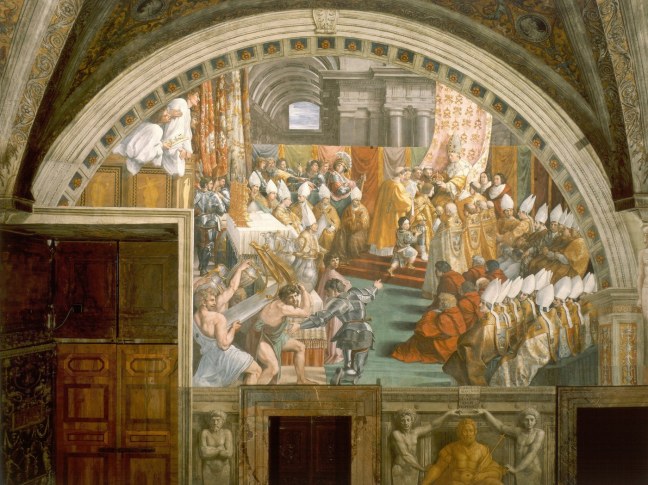
One thousand, two hundred twenty-five years ago, on December 25, 800, Pope Leo III crowned Charlemagne Holy Roman Emperor. Charlemagne became co-ruler of the Franks in 768 with his brother Carloman upon the death of their father, Pepin the Short. Charlemagne succeeded as the sole King of the Franks when Carloman died in 771. In 800, in recognition of Charlemagne’s military help in securing the papal succession, Leo granted the western lands from Northern Italy to the North Sea as far west as modern-day Spain, in what became known as the Carolingian Empire. To assist him, Charlemagne installed his son Charles the Younger as co-ruler of the Franks. When Charles died in 814, his brother Louis the Pious succeeded him. Louis succeeded his father, Charlemagne, as sole emperor after Charlemagne’s death in 814, following almost fifty years of rule.

One thousand twenty-five years ago, on December 25, 1000, Stephen I established the Christian Kingdom of Hungary. Stephen was born with the name Vajk in 975, but his parents, Grand Prince Géza and his wife, Sarolt, had him baptized with the Christian name Stephen. Stephen became the Grand Prince upon his father’s death. Although Géza was baptized, he continued to practice pagan rites throughout his life. Stephen united the Magyars under one kingdom and was crowned King of the Hungarians on August 20, 1000. Recognizing Stephen’s Christian devotion, Pope Sylvester II sent a golden crown, an apostolic cross, and a letter of blessing, recognizing him as a Christian King upon Stephen’s coronation on Christmas Day. Stephen outlived both of his children, and his nephew Peter I succeeded him in 1038. Pope Gregory VII canonized Stephen in 1083.

Two hundred fifty years ago, on December 31, 1775, British defenders defeated the American Continental Army at the Battle of Quebec, thwarting America’s first attempt to conquer Canada. Quebec became a British Canadian province in 1763 following the Seven Years’ War. Many protestant Canadians felt threatened by Quebec’s French and Catholic citizenry, and many Québécois did not appreciate their inclusion in a primarily Protestant, English colony. The American Continental Congress aimed to exploit this alienation and encourage Quebec’s inclusion in the southern colonies through conquest. The Continental Army general assigned 1,100 soldiers under Colonel Benedict Arnold to the task. By the time the small army arrived, almost half the men had died or deserted after a two-month march through the cold wilderness. A second force under General Richard Montgomery marched from Fort Ticonderoga to reinforce Arnold, but they too lost half their men. As a result, the final army included the original 1,100 number, but most of the troops were weakened by the enforced march. A severe snowstorm further hampered the American efforts, with many killed, over 400 captured, Montgomery dead, and Arnold wounded. Despite the defeat, Arnold’s army held on until British General John Burgoyne finally drove the Americans out in May 1776. In the War of 1812, the United States again tried to take Canada, but that invasion suffered a similar fate.

Two hundred twenty-five years ago, on December 24, 1800, the Rue Saint-Nicaise plot to kill Napoleon Bonaparte failed. In 1799, Bonaparte staged a coup d’état and made himself the First Consul of France, effectively ruling the country. Although most people welcomed him after years of instability, many still wanted to eliminate him. Pierre Robinault de Saint-Regent, a former army officer and leader of insurgents aiming to restore the monarchy, devised the plot. The royalists hoped that Bonaparte’s death and the resulting power vacuum would inspire a movement to restore the King. The conspirators planned to plant a bomb in a cart on Rue Saint-Nicaise and detonate it as Bonaparte’s carriage passed by on its way to the opera. Fortunately for Bonaparte, the bombers detonated the device too late, and he survived, but the street and nearby buildings suffered significant damage. While Bonaparte initially suspected that the Jacobins, radical republicans, were behind the plot, an investigation quickly uncovered the Royalist conspirators. Despite these findings, Bonaparte targeted both groups, sending both Royalists and Jacobins to the guillotine, further strengthening his control.

Seventy-five years ago, on December 25, 1950, Scottish nationalist students stole the Stone of Scone from Westminster Abbey. The origins of the sandstone block, used as a coronation seat for centuries, are unclear. It first appeared sometime in the fifth or sixth century. Many have suggested its source is Ireland, Egypt, or biblical Israel, but geologists have shown its sandstone matches that found in Scone, Scotland. The Stone was taken in 1296 by Edward I of England and brought to Westminster Abbey, where it has been used for English and British coronations. Four members of the Scottish Covenant Association, which supported self-rule through a Scottish Parliament, devised a plan to steal the Stone to promote their cause. They joined a tour of the Abbey on Christmas Eve and hid until it closed. While trying to take the Stone, they damaged the coronation chair designed to hold it and broke it in two. They transported the Stone to Glasgow. The police finally recovered it on April 10. Initially, Scottish public opinion supported the thieves, but news of British King George’s cancer diagnosis turned public opinion against the plotters, and ultimately, the Stone was returned to Westminster Abbey. Believing that prosecuting them would embarrass the monarchy, the thieves were never charged. The Coronation Chair was repaired and used in Queen Elizabeth II’s coronation. The British government officially returned the Stone to Scotland in 1996 and displayed it at Edinburgh Castle. However, the Scots return it to Westminster Abbey for coronations.

Fifty years ago, on December 2, 1975, during the Laotian Civil War, the Pathet Lao seized the Laotian capital, Vientiane, and forced the abdication of King Sisavang Vatthana, proclaiming the Lao People’s Republic. When Japan conquered Indochina (comprising Laos, Cambodia, and Vietnam), it installed King Sisavang Vong as a puppet ruler. Once the Allies retook the area, the French colonial authorities retained the King as head of state, maintaining a constitutional monarchy. In 1950, one of the King’s nephews, Prince Souphanouvong, formed the Pathet Lao (Lao Nation) to fight against the monarchy. Souphanouvong was a dedicated follower of Vietnam’s Ho Chi Minh, so America’s involvement in the Vietnam War against Ho only escalated the Laotian Civil War. Widespread antipathy to the Americans, especially after incursions in Laotian territory, brought followers to the Pathet Lao cause. The American withdrawal weakened the Laotian monarchy, which fell eight months after the fall of Saigon. Today, the Lao People’s Revolutionary Party continues to lead one of the last remaining Communist states.

Finally, twenty-five years ago, on December 12, 2000, the US Supreme Court halted the ballot recount in the presidential election in Florida in the case of Bush v. Gore. The 2000 election between Republican George W. Bush and Democrat Al Gore was very close in the Electoral College, despite Gore holding a half-million popular-vote lead. The election came down to Florida, where Bush was ahead by fewer than 2,000 votes. The close tally triggered an automatic recount. The first recount made the margin even closer at 317. On November 27, Republican Secretary of State Katherine Harris certified the election. On December 8, the mostly Democratic Florida Supreme Court ordered a third recount based on "undervotes" caused by punch-card ballots, which may have been miscounted as a result of "hanging chads," or poorly punched cards. Bush brought the case to the US Supreme Court, arguing that the state could not complete a recount before the Electoral College’s December 12 deadline. Gore’s team claimed the deadline was artificial and an accurate count was more important. The Court handed down two decisions. First, in a 7-2 vote, the Court held that Florida’s code violated equal protection laws because no specific definition of a valid punch-card vote existed. In the second decision, the Court decided in favor of Bush’s argument on the Electoral College deadline. The vote on this question was 5-4 along party lines.


About the Author

In the early 1990s, John Devoti had a midlife crisis. He did not want a motorcycle (those things are dangerous) or a new wife (his was very cute). Instead, he quit his auditing job and returned to school for his history doctorate. He wrote The Patriotic Business of Seeking Office: James K. Polk and the Patronage. It was not a bestseller. He taught college history for almost twenty years before retiring, and still dabbles by volunteering as a docent at the Roebling Museum in South Jersey. By the way, his wife and editor, Judy, is still very cute.

📖 John’s columns are collected in Tidbits of History: 25 Years of Historical Morsels — available on Amazon, Barnes & Noble, and at the Roebling Museum.