Interesting Facts From Our Past — by John Devoti
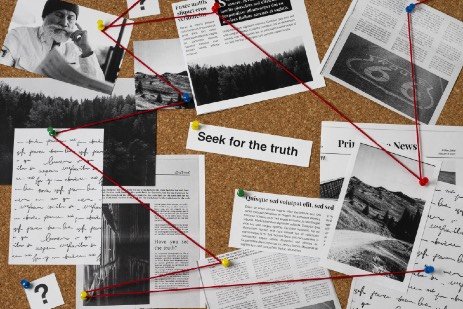
One complaint about the Internet is that it promotes all kinds of conspiracy theories. However, conspiracy theories are not a modern invention. They have been around for centuries, echoing back to when Romans complained that Nero fiddled while Rome burned—although the violin was actually invented centuries later, and Nero actually worked hard to save the Romans.
When I was teaching, I often devoted a section of my course to exploring conspiracy theories. For an assignment, I asked students to either prove or debunk a common conspiracy theory. Almost all of the students tried to support a theory. They argued, for instance, that Bigfoot roamed from Washington to Florida, yet no one has ever hit one on the interstate highways. Similarly, they claimed multiple shooters assassinated JFK, and suggested that the government faked the autopsy, ignoring overwhelming eyewitness accounts, including several who saw Oswald take the shots, and that Lyndon Johnson commissioned the Warren Commission to validate a conspiracy rather than to establish Oswald’s guilt.
So what do I mean by the term "conspiracy theory?" I am not denying that conspiracies exist. After all, several people did conspire to kill Lincoln and several other government officials. Members of Al Qaeda conspired to destroy the Twin Towers, the Pentagon, and another government building. A conspiracy theory, however, is a belief that a group has committed a crime despite all evidence to the contrary. Proponents of these theories cite contradictory evidence as proof that their beliefs are correct, claiming that this evidence shows that someone is hiding the actual story. For example, some theorists argue that the government hijacked the planes in the 9-11 attacks despite clear visual evidence showing the actual hijackers. They also allege that the towers were imploded, ignoring the fact that building demolition requires months of preparation to lay explosives, not to mention that the two towers were five times the size of any previous structures destroyed in such a manner. Of course, you may agree with some conspiracy theories. No problem. However, when dealing with a contested theory, check several independent sources and look at the evidence they present. At the very least, you will know what you are arguing against.
One hundred twenty-five years ago, on January 1, 1901, the British territories of New South Wales, Queensland, Victoria, South Australia, Tasmania, and Western Australia federated as the Commonwealth of Australia. By the nineteenth century, the six British colonies in Australia had formed their own autonomous governments, resulting in separate laws, taxes, railway gauges, postage stamps, and other conflicting policies. In 1880, the Australian Natives’ Association, which ironically, only included white men, began advocating for a united Australia, which also included New Zealand. In 1889, New South Wales (NSW) Premier Sir Henry Parkes called for a unified government in a speech published throughout Australia. Conventions held in 1891 and 1897 debated the structure of the new federation. Australians voted on the resulting Constitution Bill, which took two separate votes for approval. On July 5, 1900, the British Parliament passed the bill, and the federation was born on New Year’s Day 1901.
Finally, there have been rare instances when conspiracy theories have proven true. Remember, conspiracies depend on people to keep secrets, often for decades. As Benjamin Franklin famously said, "Three can keep a secret, if two of them are dead." For these conspiracies to remain hidden, a significant number of people must stay silent, which almost never happens. For example, take the Tuskegee Study. For years, African Americans voiced concerns that government scientists were deliberately harming black men and studying the results. The "Tuskegee Study of Untreated Syphilis in the Negro Male" began in 1932, when the United States Public Health Service (USPHS) chose a group of men with syphilis in Macon County, Georgia, to study the long-term effects of the disease. When effective treatments, such as penicillin, became available, the scientists refused to treat the subjects, arguing that black men did not trust science. Eventually, the study also included women and children. The control group received treatments that often included poisons like arsenic and mercury, while the test subjects received no treatment. In 1947, the control patients began receiving antibiotics, while the others remained untreated. Peter Buxton exposed the unethical study in 1972. By that time, two-thirds of the subjects had died, and forty wives and nineteen children had become infected. In response to Buxton’s revelations, Congress passed the National Research Act in 1974, requiring informed consent for all scientific studies. One conspiracy theory about the study persists to this day: that the scientists intentionally infected the subjects. However, there is no evidence to support this claim, and the scientists were rigorous in their record-keeping. The study’s developers picked Macon County specifically because of its high syphilis rate, making intentional infection unnecessary.
About the Author
In the early 1990s, John Devoti had a midlife crisis. He did not want a motorcycle (those things are dangerous) or a new wife (his was very cute). Instead, he quit his auditing job and returned to school for his history doctorate. He wrote The Patriotic Business of Seeking Office: James K. Polk and the Patronage. It was not a bestseller. He taught college history for almost twenty years before retiring, and still dabbles by volunteering as a docent at the Roebling Museum in South Jersey. By the way, his wife and editor, Judy, is still very cute.
📖 John’s columns are collected in Tidbits of History: 25 Years of Historical Morsels — available on Amazon, Barnes & Noble, and at the Roebling Museum.
 Central New Jersey Mensa