Interesting Facts From Our Past — by John Devoti
One source of conspiracy theories has always been religious xenophobia. While anti-Semitism and Islamophobia frequently rear their ugly heads, another common prejudice has been against Catholicism. For example, one theory posits that a small group of wealthy people (often Jewish) is running the world as the Illuminati. Interestingly, the Illuminati once did exist. In 1776, Adam Weishaupt, a professor of law in Bavaria, founded the Order of the Illuminati to combat the censorship of the Catholic Church and the government. He envisioned a secret society that would foster free speech and thought. Starting with five law students, the order grew to over two thousand members within a decade. Weishaupt organized the group along lines similar to the Freemasons, with lodges and member ranks. Both Catholic and Protestant authorities soon began working to end the society. In 1784, Karl Theodor, Duke of Bavaria, banned all secret societies. His police raided the homes of several members, including a top diplomat and Weishaupt’s second-in-command, Xavier von Zwack. Zwack’s belongings included secret documents, including a calendar, lodge locations, and bylaws. With these revelations, the society slowly dissolved. Despite what many believe today, the Illuminati have not existed for over two centuries.
Often, conspiracy theories suggest that certain groups target children for sacrifice, exploitation, or sale. For years, the Ursuline convent in Somerville, Massachusetts, had been subject to such rumors. It did not help that women ran the convent without male assistance. Stories told of nuns having illicit sex with priests. Pregnancies would result, so what happened to the children? Theorists claimed the nuns buried them in the convent’s sub-basement; never mind that a sub-basement did not exist. On July 28, 1834, Elizabeth Harrison fled the convent. She taught music there for twelve years but became upset with the Mother Superior. The next day, the Bishop visited her, calming her down, and Harrison returned willingly. However, rumors grew. Newspapers reported on Harrison’s mysterious flight, her "kidnapping," and her return to the convent. Initially, neighbors were concerned for Harrison’s well-being, but soon, talk began of her rescue. The Mother Superior took several town leaders on a tour of the convent on August 11, and the leaders left convinced that Harrison was happy and willing to stay. They planned to publish a glowing report in the next morning’s newspaper. But, before that happened, a crowd gathered and attacked the convent. They evacuated the nuns and students, then ransacked it, looking for hidden crypts with graves of the innocent. Not finding any, the mob burned the convent to the ground. They seemed to believe they were helping the nuns by destroying their home. One of the men told a nun, "We’ve spoiled your prison for you. You won’t never have to go back no more." Several men were arrested and tried for the arson, but acquitted. Despite a general outcry, even among Protestant clergy, the state legislature voted overwhelmingly against replacing the convent.
Two hundred fifty years ago, on March 3, 1776, the US Marines made their first amphibious landing at Nassau in the Bahamas. With the Continental Army short of munitions, the Continental Congress charged a naval expedition under Commodore Esek Hopkins to patrol the Virginia and North Carolina coast to raid British shipping for guns and powder. Hopkins decided to exceed his orders. He heard of a cache of weapons and gunpowder in the Bahamas and planned a raid on Nassau. Bahamas’ Royal Governor Montfort Browne received a warning about the raid, but ignored it, and Nassau did not shore up the port’s defenses. The commodore initially wanted a direct assault on the city, but Browne, upon seeing the small fleet, reinforced the city’s defenses, and Hopkins aborted the assault. A second assault near Fort Mantagu succeeded, and fifty sailors and two hundred marines took the fort. The commander of the force, Samuel Nicholas, decided to wait the night before pushing his advantage. Browne took the opportunity to move most of the munitions further inland. Hopkins’s men took the munitions left behind and brought them to Connecticut. Despite the success, Hopkins was reprimanded for exceeding his orders and, two years later, was forced to resign from the Navy.
Two hundred fifty years ago, on March 9, 1776, Adam Smith published The Wealth of Nations, which revolutionized modern economics. In 1759, Smith published The Theory of Moral Sentiments, which argued that, despite his selfish nature, man had the capacity to care for others. In 1763, Smith met Francois Quesnay, who argued that what farmers produced was the source of a nation’s wealth, not gold and silver (what Quesnay called "Physiocracy"). Influenced by that theory, Smith began researching modern economies and those of ancient Rome. He finally published his masterpiece in 1776. The full title was An Inquiry Into the Nature and Causes of the Wealth of Nations. He criticized mercantilism, the prevailing economic theory that held that the government should direct colonies to supply raw materials and buy finished goods from the mother country. Instead, he suggested the government should stay out of business and allow the market to balance itself through enlightened self-interest. He argued that free markets and free trade, without government interference, would benefit both owners and workers by enabling them to prosper. These theories became the foundation of modern capitalism.
One hundred twenty-five years ago, on March 2, 1901, the US Congress passed the Platt Amendment. A central goal of the American declaration of war against Spain (1898) was Cuban independence. After Cuba finalized its constitution in 1900, Secretary of War Elihu Root drafted a series of guidelines for United States-Cuban relations. Senator Orville Platt of Connecticut introduced the guidelines as an amendment to the Army Appropriations Bill. The Amendment stipulated that the United States could buy or lease land for military bases. It also defined circumstances under which the United States could intervene in Cuban internal affairs if the Cuban government passed laws that interfered with life, liberty, or property. The United States used the Amendment as justification for military incursions in 1906, 1912, 1917, and 1920. In 1934, President Franklin Roosevelt announced his "Good Neighbor Policy" toward Central and South America, effectively repealing the Platt Amendment. The only remaining remnant of the Amendment is the American base at Guantánamo Bay.
One hundred twenty-five years ago, on March 23, 1901, the US Army captured Emilio Aguinaldo, the first and only president of the First Philippine Republic. The Spanish-American War did not end with the Spanish defeat in 1898. Filipino insurgents rejected possession by the United States of the Philippines. Initially, the rebels tried conventional warfare against the American army and soon realized the folly of that effort. They shifted to guerrilla tactics against the US forces and elected Aguinaldo as their president and leader of their small army. Aguinaldo had previously led the Filipinos in their revolution against Spain in 1896, and continued to fight both during the Spanish-American War and against the Americans afterward. General Frederick Funston commanded the American force that captured Aguinaldo. Funston volunteered to work with Cuban rebels in 1896 and, upon the Declaration of War, was assigned to the Philippines. After the Spanish War, Funston remained in the country and led the force tracking Aguinaldo. Once Funston captured him, the war quickly ended. On April 19, Aguinaldo issued a proclamation calling for the rebels to surrender. Despite the official end to the insurrection, sporadic fighting continued for several more years. The United States would finally grant Philippine independence in 1946.
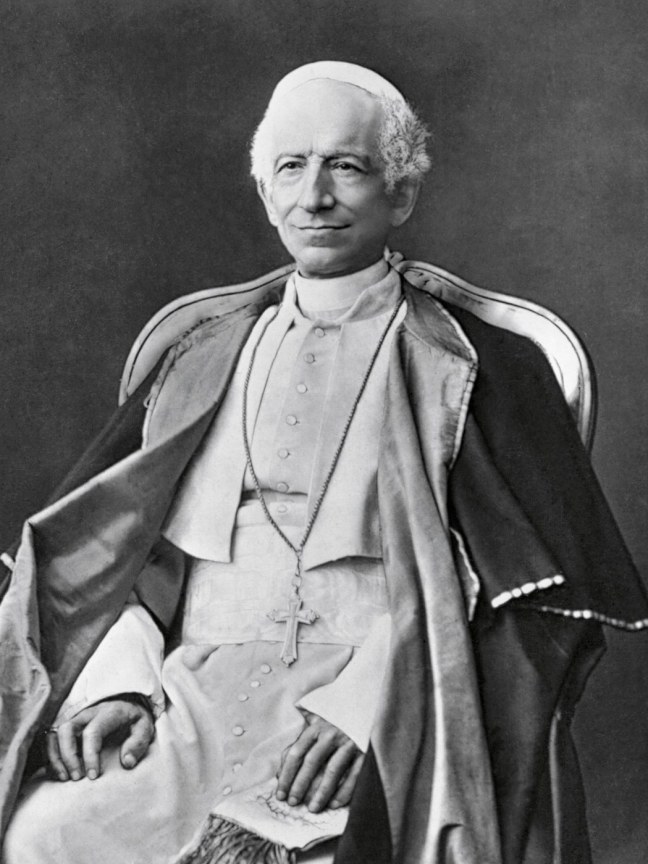
Finally, in 1893, two pamphlets, "Instructions to the Catholics. Platform of the Papal Party as Laid Down by the Pope," and excerpts from a papal encyclical from Pope Leo XIII appeared. In the "Instructions," Catholics were told that only the Pope can tell people how to think. It criticised the English language for spreading unorthodox views, and suggested any system that taught more than the Roman catechism was unnecessary. Any public school system in a Protestant nation should be destroyed. The encyclical went even further. It said that Catholics were relieved of any responsibility to the United States and that "it will be the duty of the faithful to exterminate all heretics found within the jurisdiction of the United States." In case you haven’t guessed, both of these documents were forgeries. In 1887, Henry Francis Bowers formed the American Protective Association (APA). By the turn of the twentieth century, the Catholic population had risen from 5% before the Civil War to 17%, and fear of a Catholic takeover of American institutions was rampant. By 1893, when the forgeries were released, the APA had 70,000 members. Within a year, the membership approached half a million, with the bulk of its membership in the conservative Midwest and Plains states. The popularity of the two pamphlets grew so much that Protestant newspapers began publishing editorials identifying them as forgeries. Despite these articles, about half of the APA’s membership believed they were genuine, and many others who thought they were forgeries still argued that the documents expressed actual Catholic teachings. Although several Republican politicians agreed with the APA, the party generally condemned it, and by the mid-1890s, many Republican leaders opposed the group. By 1906, when Bowers was reelected president of the APA, the organization had become irrelevant, and other organizations like the new Ku Klux Klan, reformed in 1915, took over leadership of anti-Catholic sentiment.
About the Author
In the early 1990s, John Devoti had a midlife crisis. He did not want a motorcycle (those things are dangerous) or a new wife (his was very cute). Instead, he quit his auditing job and returned to school for his history doctorate. He wrote The Patriotic Business of Seeking Office: James K. Polk and the Patronage. It was not a bestseller. He taught college history for almost twenty years before retiring, and still dabbles by volunteering as a docent at the Roebling Museum in South Jersey. By the way, his wife and editor, Judy, is still very cute.
📖 John’s columns are collected in Tidbits of History: 25 Years of Historical Morsels — available on Amazon, Barnes & Noble, and at the Roebling Museum.
 Central New Jersey Mensa