Interesting Facts From Our Past — by John Devoti
Often, horror fiction tells of mad scientists who experiment on themselves, usually with dreadful consequences. Possibly the most famous of these is The Strange Case of Dr. Jekyll and Mr. Hyde by Robert Louis Stevenson. Sometimes, real-life scientists will also try this. Many probably fail and end up in obituaries. But when scientists succeed, they can make major advances. For example, Jonas Salk worked on a polio vaccine with funding from the March of Dimes. He developed a vaccine that used dead polio cells to boost immunity. When experts balked at human testing, despite success in lab animals, Salk conducted his own tests. In 1953, he administered the vaccine to volunteers, himself, his wife, and his children. No one contracted the disease, and all developed anti-polio antibodies. He then conducted a larger test with over a million subjects a year later, and announced the success in 1955; by 1957, the vaccine was widely available.
Dr. Evan O’Neill Kane liked to operate on himself. This was not because of masochistic tendencies, but because he needed to prove a point that local anesthesia was safe and could be used instead of the more dangerous general anesthesia. In 1919, one of his fingers developed a dangerous infection, and using a local anesthetic, he amputated it. Two years later, he performed a more serious operation, removing his own inflamed appendix, using only Novocaine to numb the area. In both cases, an experienced surgeon oversaw the operations. The surgeries proved that general anesthesia was not the only way to numb a patient. Kane operated on himself again in 1932 at age 70. An inguinal hernia suffered after a horse ride six years earlier had worsened. Having performed operations on himself several times, he saw no reason not to do it again. During the surgery, he joked with his assistants but grew serious as he approached the most critical part of the repair, saying, “The risk is here, and I have to deal with it.” He then finished the operation with minimal help.
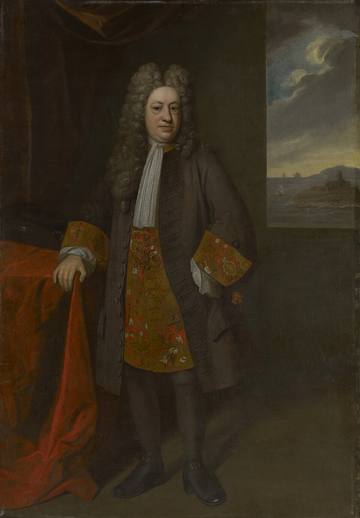
Three hundred and twenty-five years ago, on October 9, 1701, the Collegiate School of Connecticut, which would later become Yale University, was chartered in Old Saybrook. The General Court of Connecticut created the school “wherein Youth may be instructed in the Arts and Sciences who [through] the blessing of Almighty God may be fitted for employment both in Church & Civil State.” Nathaniel Lynde deeded a building and ten acres to the school in Saybrook. However, in 1716, despite protests from Saybrook residents and a deed stipulating that the school must remain there, the trustees decided to relocate to New Haven. In 1718, Elihu Yale donated a large amount of books and money to the school, prompting the trustees to rename the institution Yale College. It was renamed Yale University in 1887.
Three hundred years ago, on October 28, 1726, Jonathan Swift published the novel Gulliver’s Travels. It had a subtitle of Travels into Several Remote Nations of the World. In Four Parts. By Lemuel Gulliver, First a Surgeon, and then a Captain of Several Ships. While children usually read the book today, that was not Swift’s original intent. He meant the book “to vex the world rather than divert it.” Swift was a social critic who enjoyed pointing out society’s ludicrousness, especially in politics. The Travels mocked military powers that fought wars over trivial issues, the aristocracy that treated others as insignificant, and scholars whose projects often led to nothing. Even today, terms from the book for societies Gulliver encountered, like Lilliputians and Yahoos, are still used to describe certain groups.
One hundred and twenty-five years ago, on October 12, 1901, President Theodore Roosevelt changed the name of the president’s official residence from the Executive Mansion to the White House on all documentation. Over the years, the residence was called the “President’s Palace,” the “President’s House,” and the “Executive Mansion.” The building was originally whitewashed in 1798 to protect the porous sandstone in intense cold. After the War of 1812, in 1818, lead paint replaced the whitewash. The house was often called the “White House” because of its first painting. Roosevelt’s official renaming was part of a larger remodeling effort he initiated. In 1902, with funds allocated by Congress, he oversaw construction of two additions: a west wing to house the executive offices, and an east wing that originally served as the visitor’s entrance. Later, the First Lady’s offices were added.
Seventy-five years ago, on October 20, 1951, the “Johnny Bright incident” occurred. Johnny Bright, an African-American star football player for the Drake Bulldogs in Des Moines, Iowa, was playing against Oklahoma A&M (now known as Oklahoma State University). During the game, Bright handed the ball off and then was violently hit by guard Wilbanks Smith, resulting in a broken jaw. This was one of three attacks by Smith in the first seven minutes. Bright completed a 61-yard TD pass, but later left the game due to the injury. Bright’s play for the rest of the season was limited, playing with a wired jaw and facemask. Oklahoma A&M denied that Smith intentionally targeted Bright. Still, a series of photos published in the Des Moines Register captured the brutality of the hit and were later featured nationally in Life Magazine. Because neither Smith nor A&M received any sanctions, Drake withdrew from the Missouri Valley Conference. In solidarity with Drake, Bradley University of Peoria, Illinois, also left the conference. This incident prompted the NCAA to implement changes to limit violent blocking and mandate face guards for players. Years later, in 2005, Oklahoma State University finally apologized to Drake University, more than two decades after Bright’s death.
Finally, we discussed a scientist who was willing to vaccinate his entire family, and a doctor who performed surgery on himself. But would a scientist willingly infect himself to prove a point? Barry James Marshall was that scientist. For many years, doctors believed that ulcers were caused by excess stomach acid from an improper diet or excessive stress. In 1979, pathologist J. Robin Warren discovered that patients with ulcers had distinctively curved bacteria in their stomach biopsies. In 1982, Marshall joined Warren in a study of the bacterium Helicobacter pylori at Royal Perth Hospital in Australia. Warren and Marshall submitted a paper with their findings, but the Gastroenterological Society of Australia rejected it. In 1984, to prove the point, Marshall drank a culture of the bacterium. Three days later, he developed nausea and achlorhydria (a lack of stomach acid) and began vomiting. An endoscopy and biopsy showed the development of gastritis. After two weeks, Marshall began taking antibiotics and bismuth, and the infection disappeared, as did the gastritis. Further research showed that certain ulcers, presenting as duodenal ulcers, were actually distal pyloric ulcers and treatable with antibiotics.
About the Author
In the early 1990s, John Devoti had a midlife crisis. He did not want a motorcycle (those things are dangerous) or a new wife (his was very cute). Instead, he quit his auditing job and returned to school for his history doctorate. He wrote The Patriotic Business of Seeking Office: James K. Polk and the Patronage. It was not a bestseller. He taught college history for almost twenty years before retiring, and still dabbles by volunteering as a docent at the Roebling Museum in South Jersey. By the way, his wife and editor, Judy, is still very cute.
📖 John’s columns are collected in Tidbits of History: 25 Years of Historical Morsels — available on Amazon, Barnes & Noble, and at the Roebling Museum.

