Interesting Facts From Our Past — by John Devoti
To continue the series on people who used themselves as test subjects, we’ll look at John Paul Stapp. In 1946, Stapp was assigned to the Aero Medical Laboratory of the Wright Air Development Center in Dayton, Ohio, to test the effects of unpressurized cockpits on pilots. He often volunteered for the tests. In 1947, he was assigned to study the effects of rapid deceleration. Not wanting to take chances with volunteers, he again volunteered himself. Over a series of sixteen runs, he used rocket sleds to accelerate and decelerate quickly, enduring forces of up to 35 Gs and sustaining several injuries in the process. Despite the availability of over a dozen volunteers, Stapp continued to test himself after being transferred to Holloman Air Force Base, doing more than a dozen tests. On December 10, 1954, using a Sonic Wind I rocket-propelled sled, Stapp achieved 632 mph in five seconds, a land speed record at the time. He also decelerated in 1.4 seconds, sustaining a G-force of 46.2. He suffered severe damage to his eyesight and never rode so fast again. For the rest of his life, Stapp campaigned for improved car safety features.
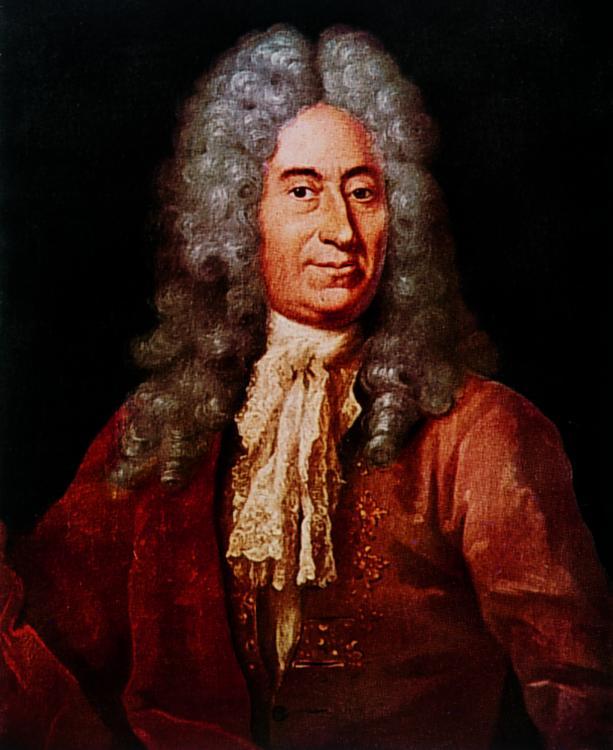
Three hundred and fifty years ago, on November 21, 1676, Danish astronomer Ole Rømer discovered that light has a finite, measurable speed. Before this, scientists believed that light was either instantaneous or traveled at infinite speed. Rømer’s discovery was accidental. He was studying the orbit of Jupiter’s moon Io, hoping to use the times Io passed behind Jupiter and solar time calculated by sailors to determine longitude, a major seventeenth-century navigational goal. This method proved impractical, but Rømer’s studies showed that the eclipses became progressively earlier than predicted as Earth approached Jupiter and later as it moved away. He suggested the time difference was because light traveled a longer path to reach Earth. Christiaan Huygens calculated the speed as 131,000 miles per second. This was 50,000 MPS less than the actual speed of 186,000 MPS, mainly due to mistakes in Rømer’s observations, but the findings proved the finite nature of light speed.
One hundred and fifty years ago, on November 23, 1876, Spanish authorities delivered William “Boss” Tweed to New York authorities. The New York Democratic political machine at the time was known as Tammany Hall, after the building where the party organization was formed. From 1858 to the early 1870s, Tweed was “Boss” of Tammany Hall. He used his influence to get his preferred candidates elected to city offices, and those officials awarded lucrative contracts to Tweed and his cronies. In 1871, The New York Times exposed fraudulent payments related to the remodeling of the City Courthouse. Tweed hoped that these scandals would blow over, but consistent reporting by city papers and political cartoons by Thomas Nast convinced the electorate to defeat Tweed’s candidates in 1871. Tweed was arrested and convicted of several crimes, including forgery and larceny. In 1875, he escaped from jail but was caught in Spain and returned. He died in prison two years later.
Seventy-five years ago, on November 10, 1951, direct-dial coast-to-coast telephone service began in the United States. In 1947, Bell Labs introduced the three-digit area code system, but operators were still needed to assist with calls outside the local area. For the next four years, AT&T worked on developing a direct numbering switching system. In 1951, Mayor M. Leslie Denning of Englewood, New Jersey, called Mayor Frank Osborne of Alameda, California. The call took eighteen seconds to connect; while the two mayors chatted, phone company scientists and executives listened to confirm the technology worked.
Twenty-five years ago, on November 21, 2001, scientists using the Hubble Space Telescope discovered a sodium atmosphere on the planet Osiris, the first atmospheric discovery on an exoplanet. In 2001, astronomers aimed the Hubble at a star in the Pegasus constellation. They discovered a wobble in the star, a sign that a planet’s gravity affected the star’s rotation. The scientists named the planet “Osiris” after the Egyptian god of the dead. The planet orbits only 4 million miles from its sun. Compare this to Mercury, which orbits our Sun at 35 million miles. Osiris is a gas giant similar to Jupiter, with temperatures averaging 2000° F. Like Jupiter, Osiris has a thick atmosphere that scientists could analyze. Scientists later discovered that the planet’s atmosphere contained hydrogen, carbon, and oxygen—the building blocks of life—but at temperatures inconsistent with life as we know it.
Finally, Werner Forssmann was a twenty-five-year-old surgical trainee first at the University of Berlin and then at the August Victoria Home in Eberswalde, near Berlin. There, in 1929, he designed a system that threaded a catheter from the arm to the heart to treat heart disease from within the organ. When he explained his invention, his teachers ordered him to abandon the research. Instead, he talked a nurse, Gerda Ditzen, into helping him test it. She agreed, but only if she was the test subject. However, when she prepared for the test, she found that Forssmann had lied and had already inserted the catheter into his own arm. Ditzen helped him to the X-ray room and took pictures that showed the catheter had indeed reached the atrium of his heart. The head clinician realized the consequences of Forssmann’s discovery and allowed him to use a catheter to send drugs directly into the heart of a terminally ill woman, and her condition improved. Despite his genius, Forssmann proved difficult to work with and lost several cardiology jobs. He eventually changed his specialty to urology. In 1956, Forssmann shared the Nobel Prize in Medicine with two other cardiologists for his work.
About the Author
In the early 1990s, John Devoti had a midlife crisis. He did not want a motorcycle (those things are dangerous) or a new wife (his was very cute). Instead, he quit his auditing job and returned to school for his history doctorate. He wrote The Patriotic Business of Seeking Office: James K. Polk and the Patronage. It was not a bestseller. He taught college history for almost twenty years before retiring, and still dabbles by volunteering as a docent at the Roebling Museum in South Jersey. By the way, his wife and editor, Judy, is still very cute.
📖 John’s columns are collected in Tidbits of History: 25 Years of Historical Morsels — available on Amazon, Barnes & Noble, and at the Roebling Museum.

