Tidbits of History — May 2026

Interesting Facts From Our Past — by John Devoti

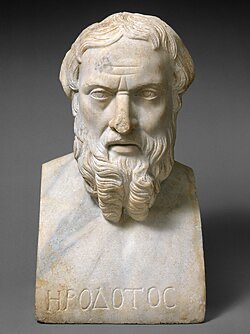
Some of you have probably done the touristy thing and visited Egypt. For others, such a visit is on the bucket list (like me). But people visiting Egypt to see the sights is not a new endeavor. Visitors have gawked at the pyramids, the temple of Karnak, or Abu Simbel. One of the earliest visitors was the Greek historian Herodotus (c. 484-c. 425 BCE). Born in Asia Minor (Modern-day Turkey), Herodotus wrote a collection of nine volumes known as The Histories, of which Volume II covers Egypt. He probably visited sometime between 450 and 430 BCE. Like most tourists, he documented his observations of the ancient monuments, but he also engaged with the locals to gain insight into their everyday lives. He marveled at the customs that differed from those in Greek culture, including the more public roles of women, their shopping in the markets, and their roles as priests, but only for female deities. While some of his claims, especially those derived from conversation, were inaccurate—such as the idea that women could only serve as priests for female gods—he accurately described various practices like mummification and the agricultural cycles tied to the annual floods of the Nile.

About four centuries later, the Sicilian Diodorus Siculus (fl. 1st century BCE) followed in Herodotus’ footsteps. Egypt appears in the first volume of Siculus’ Bibliotheca Historica, an effort to chronicle human history up to Caesar’s conquest of Gaul, which eventually reached forty volumes. While visiting Egypt around 60 BCE, Diodorus emphasized that Egyptian culture was more barbarian than Greek and Roman cultures. In his book, he commonly describes Egyptian achievements by starting with "Egyptians say" or "Egyptians claim," while rarely agreeing with them. However, he does describe the history of the Egyptians and the development of their multi-deity religion. He also discusses their agriculture, beginning as hunter-gatherers and eventually developing modern planting techniques based on the Nile River’s seasonal flooding.

Four hundred seventy-five years ago, on May 12, 1551, Charles V of Spain issued a royal decree establishing the University of San Marcos in Lima, Peru. San Marcos is the oldest university in the Americas, predating the University of Mexico by four months. In 1549, Friar Tomás de San Martín traveled to Spain to petition the king to establish a center of higher learning modeled on the University of Salamanca. Due to ill health, Friar Tomás never returned to Peru but sent Charles’ decree back to Lima. The school itself was opened in 1553 and run by Dominican monks for two decades. In 1571, King Philip II ordered the University’s secularization, and in 1574, students and professors established an independent institution. That same year, the Faculty of Law was established, and the school’s official name was changed to The Royal and Pontifical University of San Marcos of Lima. Soon, the university launched schools of the Arts, Theology, Sacred Scripture, Canon Law, and Medicine.

One hundred seventy-five years ago, on May 1, 1851, Queen Victoria opened the Great Exhibition at the Crystal Palace in London. During the 1840s, the British Society of Arts held small exhibitions of manufactured goods. Victoria’s consort, Prince Albert, became a patron of the society. He knew about larger French exhibitions and resolved to create one on an even grander scale.

In January 1850, Parliament established a Royal Commission to build a "Great Exhibition of the Works of Industry of All Nations." After rejecting many designs for the Exhibition as too expensive or impractical, the Commission settled on a glass-and-steel structure designed by Joseph Paxton, known for his designs of enormous greenhouses. To construct the Palace, Paxton chose Fox, Henderson & Company, the builders who built his earlier glasshouse designs. The final building covered 18 acres, incorporated over 3,000 columns, and used over 2,000 girders. The fair would feature works from 34 nations and would host over 14,000 exhibitors. Six million people would eventually visit the Crystal Palace before it closed in October. The exhibition made a £186,000 profit (about £20 million today) and inspired dozens of similar fairs around the world.

One hundred seventy-five years ago, on May 29, 1851, Sojourner Truth delivered her "Ain’t I a Woman?" speech at the Women’s Rights Conference in Akron, Ohio. Truth was born Isabella Baumfree in New York in 1797. She worked as a slave and in 1815, was forced to marry a fellow slave named Thomas, with whom she had five children. In 1827, New York passed the New York Anti-Slavery Law of 1827, but her owner refused to abide by it, so Truth simply left the estate. She later experienced a religious conversion and began preaching, using the name Sojourner Truth. Actually, Truth never said, "Ain’t I a woman?" The speech most quoted today was printed in 1863 and altered much of what Truth originally said. Even though she was illiterate, Truth did not speak in minstrel dialect. For example, the ending was printed in 1863 as, "If de fust woman God ever made was strong enough to turn de world upside down all her one lone, all dese togeder ought to be able to turn it back and git it right side up again, and now dey is asking to, de men better let ’em." A probably more accurate version was published in the Anti-Slavery Bugle (Salem, Massachusetts) soon after the conference. That speech ended with, "But the women are coming up, blessed be God, and a few of the men are coming up with them. But man is in a tight place, the poor slave is on him, woman is coming on him, and he is surely between a hawk and a buzzard."

Finally, Strabo (c. 64-c. 24 CE) was another ancient Egyptian tourist. He traveled to Egypt in about 27 BCE with the Roman Prefect Aelius Gallus and described his visit in Book 17 of his 17-volume work, Geography. In the book, he described the Nile and the irrigation systems that watered crops along its banks. He wrote about the customs, religious beliefs, and art of the Egyptian people. He also included commentary on the renowned monuments in Egypt, discussing whether they lived up to their reputations. He decided that the tombs in the Valley of the Kings, the boat trips at the Philae Temple complex near present-day Aswan, and the Pyramids were definitely worth the trip.


About the Author

In the early 1990s, John Devoti had a midlife crisis. He did not want a motorcycle (those things are dangerous) or a new wife (his was very cute). Instead, he quit his auditing job and returned to school for his history doctorate. He wrote The Patriotic Business of Seeking Office: James K. Polk and the Patronage. It was not a bestseller. He taught college history for almost twenty years before retiring, and still dabbles by volunteering as a docent at the Roebling Museum in South Jersey. By the way, his wife and editor, Judy, is still very cute.

📖 John’s columns are collected in Tidbits of History: 25 Years of Historical Morsels — available on Amazon, Barnes & Noble, and at the Roebling Museum.
Tidbits of History — April 2026

Interesting Facts From Our Past — by John Devoti

Last month, I described the anti-Catholic forgeries that encouraged American Catholics to reject the English language, public schools, and even to kill non-Catholic heathens. There was also an antisemitic version called the Protocols of the Elders of Zion. The first version of the Protocols was printed as a serial in the Znamia (The Banner) in St. Petersburg, Russia. It appears the Protocols were a reworking of Dialogue aux enfers entre Machiavel et Montesquieu (The Dialogue in Hell Between Machiavelli and Montesquieu) by Maurice Jody, first written in 1864 as a criticism of Napoleon III of France’s authoritarian tactics. Russian secret police took the treatise and transformed it into an antisemitic diatribe. The main argument was that Jews were running the world banking system, using it to control the world.

The Protocols first appeared in Germany in 1919, but soon arrived in America. Henry Ford had them translated and published in serial form as The International Jew in the Dearborn Independent (Michigan) in 1920, and in book form in four volumes from 1920 to 1922. Although The Times of London newspaper exposed the Protocols as fake, as with most conspiracy theories, believers simply said that the denials only proved their truth. Adolf Hitler used them to justify his "Final Solution," and many people in Europe and America still refer to them. After the 9/11 attacks and during the COVID-19 pandemic, many conspiracy theorists claimed the Protocols exposed the Jewish forces behind these catastrophes.

Seventy-five years ago, on April 17, 1951, the Peak District in central England became the United Kingdom’s first National Park. The Peak District has been inhabited by humans since they first arrived about 10,000 years ago. The area lies at the southern end of the Pennine Mountain chain in central England and is one of the country’s scenic wonders. It also has a long history of agriculture, and, with the coming of the Industrial Revolution, saw the development of coal and iron mining, and cotton and ironworking mills. After World War II, several conservation groups, inspired by America’s national parks, began petitioning Parliament to create British parks. Reports by John Dower (1945) and Arthur Hobhouse (1947) identified several areas for public use, and the 1949 National Parks Act created the establishment framework. Today, Great Britain has fifteen national parks.

Fifty years ago, on April 4, 1976, the April Fifth Movement led to the first Tiananmen incident in China. Many remember the major anti-Communist protests of 1989 in Tiananmen Square, but not the earlier protest. In January 1976, Chinese Premier Zhou Enlai died. Possibly more popular than the Communist Party’s founder, Mao Zedong, Zhou represented the party’s more moderate wing. Radical leaders in the party did not want Zhou’s death remembered, so they took down any memorials to the premier. The people decided to save any memorials for the Qingming festival, when all who had died that year would be celebrated. The day before the festival, on April 4, over a million people brought wreaths and flowers to Tiananmen Square. They also passed out pamphlets and handbills criticizing the radicals. Overnight, authorities removed all evidence of the memorial. Thousands returned to the square and angrily demanded the return of the wreaths. The crowd turned over a police vehicle and stormed government buildings. The Politburo decided to forcibly remove the protesters. That evening, police stormed the square and beat any remaining protesters. By the next day, the protesters were gone. In response to the protest, the radical faction removed Zhou’s protege Deng Xiaoping from the Politburo. However, after Mao’s death later that year, Deng returned and, by 1978, had consolidated full power. Ironically, Deng’s moderate, although still authoritarian, reforms were not enough for many, leading to the second, much more violent Tiananmen protest in which Deng ordered an extreme military response, killing hundreds.

Fifty years ago, on April 4, 1976, British Parliament member John Stonehouse resigned from the Labour Party after being arrested. In 1969, Great Britain’s Security Service, MI5, accused Stonehouse of spying for Czechoslovakia. Insufficient evidence helped Stonehouse avoid charges, and in 1980, Prime Minister Margaret Thatcher classified the files. In November 1974, Stonehouse faked his death by leaving clothes on a Miami beach, suggesting that he had committed suicide. In reality, he traveled to Australia with his mistress. However, bank accounts he used to cover his tracks and fund his new life came under suspicion and were traced back to Stonehouse. He was arrested in December 1974 but did not resign from the party until more than a year later. Stonehouse continued to serve in Parliament as a member of the English National Party until he resigned in August 1976 following his conviction. Although he never returned to Parliament, Stonehouse did profit from his notoriety, publishing three novels and giving several TV interviews.

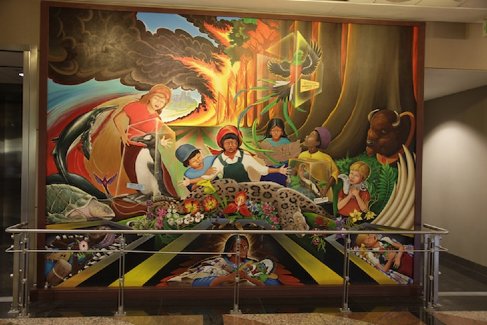
Finally, many of you have probably traveled to Denver International Airport. However, did you know that some believe this airport is a hub for Masonic, Illuminati, and extraterrestrial activity? It’s even claimed to be the headquarters for a global genocide that will trigger the New World Order. Questions about the airport began during its planning phase. Why did Denver need a new airport with fewer runways than the existing Stapleton Airport? What are the eight levels of underground tunnels leading nowhere? Why are the runways laid out in the pattern of a swastika? There are many theories, but no facts to support those theories. As with many conspiracy theories, these claims are based on deliberate misrepresentation of actual facts. For example, inside the finished terminal, two murals located by the baggage claim depict images of conflict and stormtroopers. These murals, titled "In Peace and Harmony with Nature" and "Children of the World Dream of Peace," were actually designed to convey messages of optimism. The first mural shows children ultimately rebuilding the land, while the second depicts a scene of peaceful harmony overcoming war. But one theory suggests that these murals show children being forced to work as slaves below the airport for reptilian extraterrestrials (possibly using those extra tunnels). As is typical with many conspiracy theories, proponents never explain why no evidence of these extraterrestrials exists, despite claims of thousands of child slaves working beneath our feet, or why the aliens would so openly display their presence through public murals.


About the Author

In the early 1990s, John Devoti had a midlife crisis. He did not want a motorcycle (those things are dangerous) or a new wife (his was very cute). Instead, he quit his auditing job and returned to school for his history doctorate. He wrote The Patriotic Business of Seeking Office: James K. Polk and the Patronage. It was not a bestseller. He taught college history for almost twenty years before retiring, and still dabbles by volunteering as a docent at the Roebling Museum in South Jersey. By the way, his wife and editor, Judy, is still very cute.

📖 John’s columns are collected in Tidbits of History: 25 Years of Historical Morsels — available on Amazon, Barnes & Noble, and at the Roebling Museum.
Tidbits of History — March 2026

Interesting Facts From Our Past — by John Devoti

One source of conspiracy theories has always been religious xenophobia. While anti-Semitism and Islamophobia frequently rear their ugly heads, another common prejudice has been against Catholicism. For example, one theory posits that a small group of wealthy people (often Jewish) is running the world as the Illuminati. Interestingly, the Illuminati once did exist. In 1776, Adam Weishaupt, a professor of law in Bavaria, founded the Order of the Illuminati to combat the censorship of the Catholic Church and the government. He envisioned a secret society that would foster free speech and thought. Starting with five law students, the order grew to over two thousand members within a decade. Weishaupt organized the group along lines similar to the Freemasons, with lodges and member ranks. Both Catholic and Protestant authorities soon began working to end the society. In 1784, Karl Theodor, Duke of Bavaria, banned all secret societies. His police raided the homes of several members, including a top diplomat and Weishaupt’s second-in-command, Xavier von Zwack. Zwack’s belongings included secret documents, including a calendar, lodge locations, and bylaws. With these revelations, the society slowly dissolved. Despite what many believe today, the Illuminati have not existed for over two centuries.

Often, conspiracy theories suggest that certain groups target children for sacrifice, exploitation, or sale. For years, the Ursuline convent in Somerville, Massachusetts, had been subject to such rumors. It did not help that women ran the convent without male assistance. Stories told of nuns having illicit sex with priests. Pregnancies would result, so what happened to the children? Theorists claimed the nuns buried them in the convent’s sub-basement; never mind that a sub-basement did not exist. On July 28, 1834, Elizabeth Harrison fled the convent. She taught music there for twelve years but became upset with the Mother Superior. The next day, the Bishop visited her, calming her down, and Harrison returned willingly. However, rumors grew. Newspapers reported on Harrison’s mysterious flight, her "kidnapping," and her return to the convent. Initially, neighbors were concerned for Harrison’s well-being, but soon, talk began of her rescue. The Mother Superior took several town leaders on a tour of the convent on August 11, and the leaders left convinced that Harrison was happy and willing to stay. They planned to publish a glowing report in the next morning’s newspaper. But, before that happened, a crowd gathered and attacked the convent. They evacuated the nuns and students, then ransacked it, looking for hidden crypts with graves of the innocent. Not finding any, the mob burned the convent to the ground. They seemed to believe they were helping the nuns by destroying their home. One of the men told a nun, "We’ve spoiled your prison for you. You won’t never have to go back no more." Several men were arrested and tried for the arson, but acquitted. Despite a general outcry, even among Protestant clergy, the state legislature voted overwhelmingly against replacing the convent.

Two hundred fifty years ago, on March 3, 1776, the US Marines made their first amphibious landing at Nassau in the Bahamas. With the Continental Army short of munitions, the Continental Congress charged a naval expedition under Commodore Esek Hopkins to patrol the Virginia and North Carolina coast to raid British shipping for guns and powder. Hopkins decided to exceed his orders. He heard of a cache of weapons and gunpowder in the Bahamas and planned a raid on Nassau. Bahamas’ Royal Governor Montfort Browne received a warning about the raid, but ignored it, and Nassau did not shore up the port’s defenses. The commodore initially wanted a direct assault on the city, but Browne, upon seeing the small fleet, reinforced the city’s defenses, and Hopkins aborted the assault. A second assault near Fort Mantagu succeeded, and fifty sailors and two hundred marines took the fort. The commander of the force, Samuel Nicholas, decided to wait the night before pushing his advantage. Browne took the opportunity to move most of the munitions further inland. Hopkins’s men took the munitions left behind and brought them to Connecticut. Despite the success, Hopkins was reprimanded for exceeding his orders and, two years later, was forced to resign from the Navy.

Two hundred fifty years ago, on March 9, 1776, Adam Smith published The Wealth of Nations, which revolutionized modern economics. In 1759, Smith published The Theory of Moral Sentiments, which argued that, despite his selfish nature, man had the capacity to care for others. In 1763, Smith met Francois Quesnay, who argued that what farmers produced was the source of a nation’s wealth, not gold and silver (what Quesnay called "Physiocracy"). Influenced by that theory, Smith began researching modern economies and those of ancient Rome. He finally published his masterpiece in 1776. The full title was An Inquiry Into the Nature and Causes of the Wealth of Nations. He criticized mercantilism, the prevailing economic theory that held that the government should direct colonies to supply raw materials and buy finished goods from the mother country. Instead, he suggested the government should stay out of business and allow the market to balance itself through enlightened self-interest. He argued that free markets and free trade, without government interference, would benefit both owners and workers by enabling them to prosper. These theories became the foundation of modern capitalism.

One hundred twenty-five years ago, on March 2, 1901, the US Congress passed the Platt Amendment. A central goal of the American declaration of war against Spain (1898) was Cuban independence. After Cuba finalized its constitution in 1900, Secretary of War Elihu Root drafted a series of guidelines for United States-Cuban relations. Senator Orville Platt of Connecticut introduced the guidelines as an amendment to the Army Appropriations Bill. The Amendment stipulated that the United States could buy or lease land for military bases. It also defined circumstances under which the United States could intervene in Cuban internal affairs if the Cuban government passed laws that interfered with life, liberty, or property. The United States used the Amendment as justification for military incursions in 1906, 1912, 1917, and 1920. In 1934, President Franklin Roosevelt announced his "Good Neighbor Policy" toward Central and South America, effectively repealing the Platt Amendment. The only remaining remnant of the Amendment is the American base at Guantánamo Bay.

One hundred twenty-five years ago, on March 23, 1901, the US Army captured Emilio Aguinaldo, the first and only president of the First Philippine Republic. The Spanish-American War did not end with the Spanish defeat in 1898. Filipino insurgents rejected possession by the United States of the Philippines. Initially, the rebels tried conventional warfare against the American army and soon realized the folly of that effort. They shifted to guerrilla tactics against the US forces and elected Aguinaldo as their president and leader of their small army. Aguinaldo had previously led the Filipinos in their revolution against Spain in 1896, and continued to fight both during the Spanish-American War and against the Americans afterward. General Frederick Funston commanded the American force that captured Aguinaldo. Funston volunteered to work with Cuban rebels in 1896 and, upon the Declaration of War, was assigned to the Philippines. After the Spanish War, Funston remained in the country and led the force tracking Aguinaldo. Once Funston captured him, the war quickly ended. On April 19, Aguinaldo issued a proclamation calling for the rebels to surrender. Despite the official end to the insurrection, sporadic fighting continued for several more years. The United States would finally grant Philippine independence in 1946.

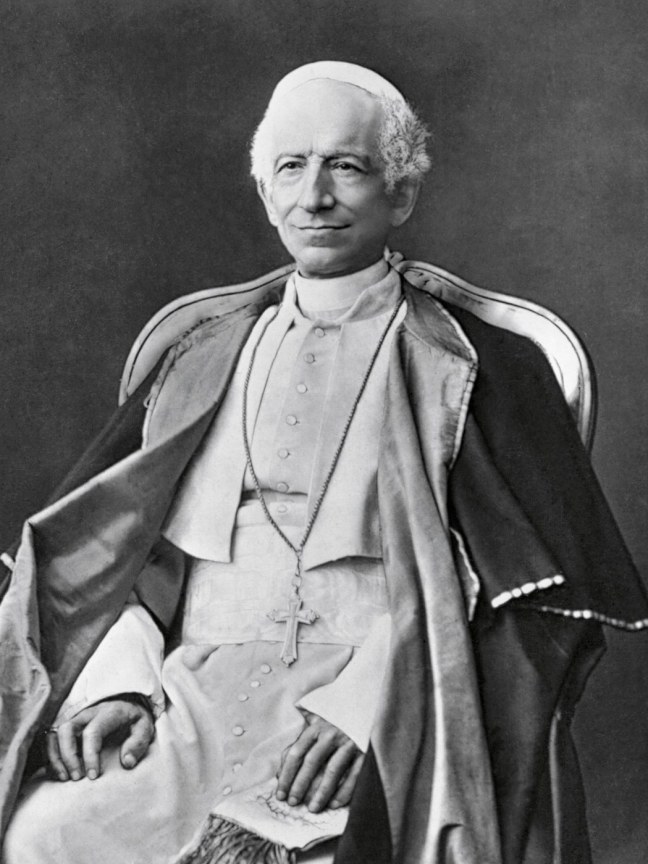
Finally, in 1893, two pamphlets, "Instructions to the Catholics. Platform of the Papal Party as Laid Down by the Pope," and excerpts from a papal encyclical from Pope Leo XIII appeared. In the "Instructions," Catholics were told that only the Pope can tell people how to think. It criticised the English language for spreading unorthodox views, and suggested any system that taught more than the Roman catechism was unnecessary. Any public school system in a Protestant nation should be destroyed. The encyclical went even further. It said that Catholics were relieved of any responsibility to the United States and that "it will be the duty of the faithful to exterminate all heretics found within the jurisdiction of the United States." In case you haven’t guessed, both of these documents were forgeries. In 1887, Henry Francis Bowers formed the American Protective Association (APA). By the turn of the twentieth century, the Catholic population had risen from 5% before the Civil War to 17%, and fear of a Catholic takeover of American institutions was rampant. By 1893, when the forgeries were released, the APA had 70,000 members. Within a year, the membership approached half a million, with the bulk of its membership in the conservative Midwest and Plains states. The popularity of the two pamphlets grew so much that Protestant newspapers began publishing editorials identifying them as forgeries. Despite these articles, about half of the APA’s membership believed they were genuine, and many others who thought they were forgeries still argued that the documents expressed actual Catholic teachings. Although several Republican politicians agreed with the APA, the party generally condemned it, and by the mid-1890s, many Republican leaders opposed the group. By 1906, when Bowers was reelected president of the APA, the organization had become irrelevant, and other organizations like the new Ku Klux Klan, reformed in 1915, took over leadership of anti-Catholic sentiment.


About the Author

In the early 1990s, John Devoti had a midlife crisis. He did not want a motorcycle (those things are dangerous) or a new wife (his was very cute). Instead, he quit his auditing job and returned to school for his history doctorate. He wrote The Patriotic Business of Seeking Office: James K. Polk and the Patronage. It was not a bestseller. He taught college history for almost twenty years before retiring, and still dabbles by volunteering as a docent at the Roebling Museum in South Jersey. By the way, his wife and editor, Judy, is still very cute.

📖 John’s columns are collected in Tidbits of History: 25 Years of Historical Morsels — available on Amazon, Barnes & Noble, and at the Roebling Museum.
Tidbits of History — January 2026

Interesting Facts From Our Past — by John Devoti

One complaint about the Internet is that it promotes all kinds of conspiracy theories. However, conspiracy theories are not a modern invention. They have been around for centuries, echoing back to when Romans complained that Nero fiddled while Rome burned—although the violin was actually invented centuries later, and Nero actually worked hard to save the Romans.

When I was teaching, I often devoted a section of my course to exploring conspiracy theories. For an assignment, I asked students to either prove or debunk a common conspiracy theory. Almost all of the students tried to support a theory. They argued, for instance, that Bigfoot roamed from Washington to Florida, yet no one has ever hit one on the interstate highways. Similarly, they claimed multiple shooters assassinated JFK, and suggested that the government faked the autopsy, ignoring overwhelming eyewitness accounts, including several who saw Oswald take the shots, and that Lyndon Johnson commissioned the Warren Commission to validate a conspiracy rather than to establish Oswald’s guilt.

So what do I mean by the term "conspiracy theory?" I am not denying that conspiracies exist. After all, several people did conspire to kill Lincoln and several other government officials. Members of Al Qaeda conspired to destroy the Twin Towers, the Pentagon, and another government building. A conspiracy theory, however, is a belief that a group has committed a crime despite all evidence to the contrary. Proponents of these theories cite contradictory evidence as proof that their beliefs are correct, claiming that this evidence shows that someone is hiding the actual story. For example, some theorists argue that the government hijacked the planes in the 9-11 attacks despite clear visual evidence showing the actual hijackers. They also allege that the towers were imploded, ignoring the fact that building demolition requires months of preparation to lay explosives, not to mention that the two towers were five times the size of any previous structures destroyed in such a manner. Of course, you may agree with some conspiracy theories. No problem. However, when dealing with a contested theory, check several independent sources and look at the evidence they present. At the very least, you will know what you are arguing against.

One hundred twenty-five years ago, on January 1, 1901, the British territories of New South Wales, Queensland, Victoria, South Australia, Tasmania, and Western Australia federated as the Commonwealth of Australia. By the nineteenth century, the six British colonies in Australia had formed their own autonomous governments, resulting in separate laws, taxes, railway gauges, postage stamps, and other conflicting policies. In 1880, the Australian Natives’ Association, which ironically, only included white men, began advocating for a united Australia, which also included New Zealand. In 1889, New South Wales (NSW) Premier Sir Henry Parkes called for a unified government in a speech published throughout Australia. Conventions held in 1891 and 1897 debated the structure of the new federation. Australians voted on the resulting Constitution Bill, which took two separate votes for approval. On July 5, 1900, the British Parliament passed the bill, and the federation was born on New Year’s Day 1901.

Finally, there have been rare instances when conspiracy theories have proven true. Remember, conspiracies depend on people to keep secrets, often for decades. As Benjamin Franklin famously said, "Three can keep a secret, if two of them are dead." For these conspiracies to remain hidden, a significant number of people must stay silent, which almost never happens. For example, take the Tuskegee Study. For years, African Americans voiced concerns that government scientists were deliberately harming black men and studying the results. The "Tuskegee Study of Untreated Syphilis in the Negro Male" began in 1932, when the United States Public Health Service (USPHS) chose a group of men with syphilis in Macon County, Georgia, to study the long-term effects of the disease. When effective treatments, such as penicillin, became available, the scientists refused to treat the subjects, arguing that black men did not trust science. Eventually, the study also included women and children. The control group received treatments that often included poisons like arsenic and mercury, while the test subjects received no treatment. In 1947, the control patients began receiving antibiotics, while the others remained untreated. Peter Buxton exposed the unethical study in 1972. By that time, two-thirds of the subjects had died, and forty wives and nineteen children had become infected. In response to Buxton’s revelations, Congress passed the National Research Act in 1974, requiring informed consent for all scientific studies. One conspiracy theory about the study persists to this day: that the scientists intentionally infected the subjects. However, there is no evidence to support this claim, and the scientists were rigorous in their record-keeping. The study’s developers picked Macon County specifically because of its high syphilis rate, making intentional infection unnecessary.


About the Author

In the early 1990s, John Devoti had a midlife crisis. He did not want a motorcycle (those things are dangerous) or a new wife (his was very cute). Instead, he quit his auditing job and returned to school for his history doctorate. He wrote The Patriotic Business of Seeking Office: James K. Polk and the Patronage. It was not a bestseller. He taught college history for almost twenty years before retiring, and still dabbles by volunteering as a docent at the Roebling Museum in South Jersey. By the way, his wife and editor, Judy, is still very cute.

📖 John’s columns are collected in Tidbits of History: 25 Years of Historical Morsels — available on Amazon, Barnes & Noble, and at the Roebling Museum.
Tidbits of History — December 2025

Interesting Facts From Our Past — by John Devoti

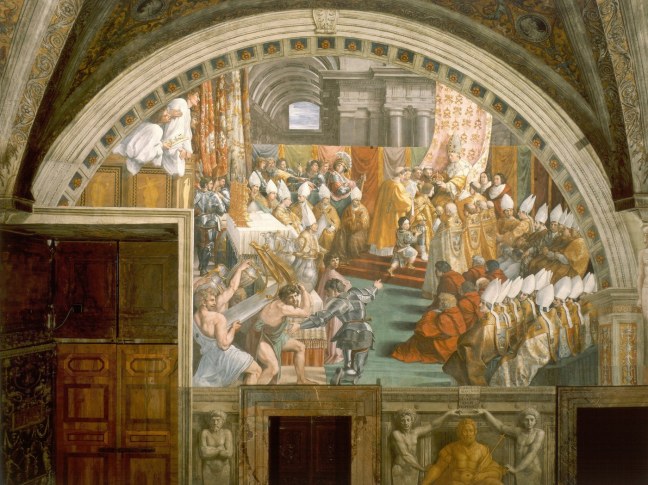
One thousand, two hundred twenty-five years ago, on December 25, 800, Pope Leo III crowned Charlemagne Holy Roman Emperor. Charlemagne became co-ruler of the Franks in 768 with his brother Carloman upon the death of their father, Pepin the Short. Charlemagne succeeded as the sole King of the Franks when Carloman died in 771. In 800, in recognition of Charlemagne’s military help in securing the papal succession, Leo granted the western lands from Northern Italy to the North Sea as far west as modern-day Spain, in what became known as the Carolingian Empire. To assist him, Charlemagne installed his son Charles the Younger as co-ruler of the Franks. When Charles died in 814, his brother Louis the Pious succeeded him. Louis succeeded his father, Charlemagne, as sole emperor after Charlemagne’s death in 814, following almost fifty years of rule.

One thousand twenty-five years ago, on December 25, 1000, Stephen I established the Christian Kingdom of Hungary. Stephen was born with the name Vajk in 975, but his parents, Grand Prince Géza and his wife, Sarolt, had him baptized with the Christian name Stephen. Stephen became the Grand Prince upon his father’s death. Although Géza was baptized, he continued to practice pagan rites throughout his life. Stephen united the Magyars under one kingdom and was crowned King of the Hungarians on August 20, 1000. Recognizing Stephen’s Christian devotion, Pope Sylvester II sent a golden crown, an apostolic cross, and a letter of blessing, recognizing him as a Christian King upon Stephen’s coronation on Christmas Day. Stephen outlived both of his children, and his nephew Peter I succeeded him in 1038. Pope Gregory VII canonized Stephen in 1083.

Two hundred fifty years ago, on December 31, 1775, British defenders defeated the American Continental Army at the Battle of Quebec, thwarting America’s first attempt to conquer Canada. Quebec became a British Canadian province in 1763 following the Seven Years’ War. Many protestant Canadians felt threatened by Quebec’s French and Catholic citizenry, and many Québécois did not appreciate their inclusion in a primarily Protestant, English colony. The American Continental Congress aimed to exploit this alienation and encourage Quebec’s inclusion in the southern colonies through conquest. The Continental Army general assigned 1,100 soldiers under Colonel Benedict Arnold to the task. By the time the small army arrived, almost half the men had died or deserted after a two-month march through the cold wilderness. A second force under General Richard Montgomery marched from Fort Ticonderoga to reinforce Arnold, but they too lost half their men. As a result, the final army included the original 1,100 number, but most of the troops were weakened by the enforced march. A severe snowstorm further hampered the American efforts, with many killed, over 400 captured, Montgomery dead, and Arnold wounded. Despite the defeat, Arnold’s army held on until British General John Burgoyne finally drove the Americans out in May 1776. In the War of 1812, the United States again tried to take Canada, but that invasion suffered a similar fate.

Two hundred twenty-five years ago, on December 24, 1800, the Rue Saint-Nicaise plot to kill Napoleon Bonaparte failed. In 1799, Bonaparte staged a coup d’état and made himself the First Consul of France, effectively ruling the country. Although most people welcomed him after years of instability, many still wanted to eliminate him. Pierre Robinault de Saint-Regent, a former army officer and leader of insurgents aiming to restore the monarchy, devised the plot. The royalists hoped that Bonaparte’s death and the resulting power vacuum would inspire a movement to restore the King. The conspirators planned to plant a bomb in a cart on Rue Saint-Nicaise and detonate it as Bonaparte’s carriage passed by on its way to the opera. Fortunately for Bonaparte, the bombers detonated the device too late, and he survived, but the street and nearby buildings suffered significant damage. While Bonaparte initially suspected that the Jacobins, radical republicans, were behind the plot, an investigation quickly uncovered the Royalist conspirators. Despite these findings, Bonaparte targeted both groups, sending both Royalists and Jacobins to the guillotine, further strengthening his control.

Seventy-five years ago, on December 25, 1950, Scottish nationalist students stole the Stone of Scone from Westminster Abbey. The origins of the sandstone block, used as a coronation seat for centuries, are unclear. It first appeared sometime in the fifth or sixth century. Many have suggested its source is Ireland, Egypt, or biblical Israel, but geologists have shown its sandstone matches that found in Scone, Scotland. The Stone was taken in 1296 by Edward I of England and brought to Westminster Abbey, where it has been used for English and British coronations. Four members of the Scottish Covenant Association, which supported self-rule through a Scottish Parliament, devised a plan to steal the Stone to promote their cause. They joined a tour of the Abbey on Christmas Eve and hid until it closed. While trying to take the Stone, they damaged the coronation chair designed to hold it and broke it in two. They transported the Stone to Glasgow. The police finally recovered it on April 10. Initially, Scottish public opinion supported the thieves, but news of British King George’s cancer diagnosis turned public opinion against the plotters, and ultimately, the Stone was returned to Westminster Abbey. Believing that prosecuting them would embarrass the monarchy, the thieves were never charged. The Coronation Chair was repaired and used in Queen Elizabeth II’s coronation. The British government officially returned the Stone to Scotland in 1996 and displayed it at Edinburgh Castle. However, the Scots return it to Westminster Abbey for coronations.

Fifty years ago, on December 2, 1975, during the Laotian Civil War, the Pathet Lao seized the Laotian capital, Vientiane, and forced the abdication of King Sisavang Vatthana, proclaiming the Lao People’s Republic. When Japan conquered Indochina (comprising Laos, Cambodia, and Vietnam), it installed King Sisavang Vong as a puppet ruler. Once the Allies retook the area, the French colonial authorities retained the King as head of state, maintaining a constitutional monarchy. In 1950, one of the King’s nephews, Prince Souphanouvong, formed the Pathet Lao (Lao Nation) to fight against the monarchy. Souphanouvong was a dedicated follower of Vietnam’s Ho Chi Minh, so America’s involvement in the Vietnam War against Ho only escalated the Laotian Civil War. Widespread antipathy to the Americans, especially after incursions in Laotian territory, brought followers to the Pathet Lao cause. The American withdrawal weakened the Laotian monarchy, which fell eight months after the fall of Saigon. Today, the Lao People’s Revolutionary Party continues to lead one of the last remaining Communist states.

Finally, twenty-five years ago, on December 12, 2000, the US Supreme Court halted the ballot recount in the presidential election in Florida in the case of Bush v. Gore. The 2000 election between Republican George W. Bush and Democrat Al Gore was very close in the Electoral College, despite Gore holding a half-million popular-vote lead. The election came down to Florida, where Bush was ahead by fewer than 2,000 votes. The close tally triggered an automatic recount. The first recount made the margin even closer at 317. On November 27, Republican Secretary of State Katherine Harris certified the election. On December 8, the mostly Democratic Florida Supreme Court ordered a third recount based on "undervotes" caused by punch-card ballots, which may have been miscounted as a result of "hanging chads," or poorly punched cards. Bush brought the case to the US Supreme Court, arguing that the state could not complete a recount before the Electoral College’s December 12 deadline. Gore’s team claimed the deadline was artificial and an accurate count was more important. The Court handed down two decisions. First, in a 7-2 vote, the Court held that Florida’s code violated equal protection laws because no specific definition of a valid punch-card vote existed. In the second decision, the Court decided in favor of Bush’s argument on the Electoral College deadline. The vote on this question was 5-4 along party lines.


About the Author

In the early 1990s, John Devoti had a midlife crisis. He did not want a motorcycle (those things are dangerous) or a new wife (his was very cute). Instead, he quit his auditing job and returned to school for his history doctorate. He wrote The Patriotic Business of Seeking Office: James K. Polk and the Patronage. It was not a bestseller. He taught college history for almost twenty years before retiring, and still dabbles by volunteering as a docent at the Roebling Museum in South Jersey. By the way, his wife and editor, Judy, is still very cute.

📖 John’s columns are collected in Tidbits of History: 25 Years of Historical Morsels — available on Amazon, Barnes & Noble, and at the Roebling Museum.
Tidbits of History — November 2025

Interesting Facts From Our Past — by John Devoti

Two hundred seventy-five years ago, on November 11, 1750, students at the College of William and Mary in Williamsburg, Virginia, formed the Flat Hat Club (FHC), the first college fraternity. The initials likely also stand for "Fraternitas, Humanitas, et Cognitio" (Brotherhood, Humanity, and Knowledge). The club was a secret, social club that, to member Thomas Jefferson, "had no useful object." Members eventually lost interest in the society, and it ended in the early 1770s. A few years later, in 1776, the Phi Beta Kappa club was formed at the College of William and Mary, the first Greek-letter fraternity.

Two hundred and fifty years ago, on November 7, 1775, John Murray, the fourth Earl of Dunmore and royal governor of the American colony of Virginia, issued the Lord Dunmore Offer of Emancipation. This proclamation promised freedom to enslaved people and indentured servants in the colony if they agreed to take up arms against American rebels. This was the first large-scale emancipation in North America. Six months earlier, Dunmore fled the Virginia capital, Williamsburg, for Norfolk because of rumors he was considering the action. With only a few hundred royal troops supporting him, Dunmore hoped he could expand his army with "Lord Dunmore’s Ethiopian Regiment," while also giving rebellious plantation owners more to think about. Soon after the proclamation, the Virginia Convention issued an offer to escaped slaves, allowing them to return to their owners within ten days without facing punishment. Between 800 and 2000 men accepted Lord Dunmore’s offer, but a smallpox outbreak reduced that number to about 300. Nonetheless, estimates suggest that at least 100,000 slaves attempted to escape during the war.

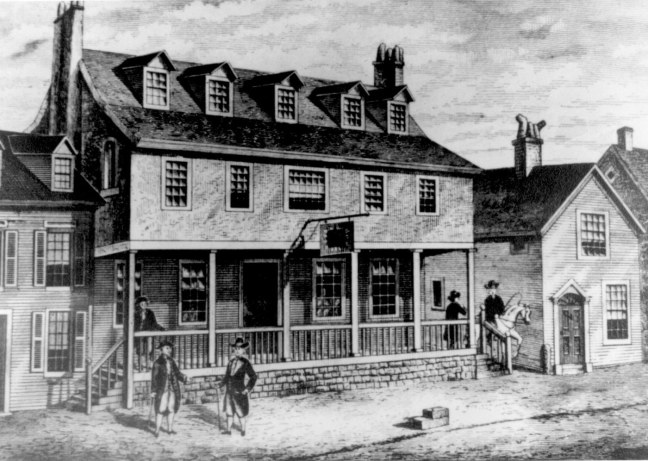
Two hundred fifty years ago, on November 10, 1775, Samuel Nicholas formed the United States Marine Corps at Tun Tavern in Philadelphia, just one of several notable events that happened at the tavern. Samuel Carpenter established Tun Tavern in 1685, just three years after the Pennsylvania colony was established. Located at the corner of Tun Alley and Water Street, the tavern had a reputation for serving the best beer in town. In 1732, the first American Freemason lodge was formed at Tun Tavern, and it would eventually become home to the Grand Lodge of Pennsylvania. Later, the St. George’s Society and the St. Andrews Society were founded to help needy Philadelphians. Benjamin Franklin formed the Pennsylvania Militia in 1756, and a congressional committee led by John Adams in October 1775 drafted a declaration of war and commissioned a naval fleet from the tavern. A month later, the Continental Congress assigned Samuel Nicholas the task of forming two battalions of marines, and he set up recruitment at the tavern.

Seventy-five years ago, on November 8, 1950, US Air Force Lt. Russell Brown shot down two North Korean MiG-15s in the first jet-to-jet dogfight. In early November, American General Douglas MacArthur authorized a bombing campaign against North Korean cities to eliminate military targets and slow the Chinese advance across the Yalu River. At the same time, Soviet-built MiG-15s joined the fight, the first time the Americans had faced the MiGs. On November 8, a group of F-80s was ordered to strafe the airfield at Sinuiju, where they met the North Korean jets. After their strafing runs, Lieutenant Russell and Major Evans Stephens were providing cover for the other fighters when Stephens spotted two MiGs, and the two pilots attacked. With only one gun still working (the others had jammed during the strafing run), Brown shot down both airplanes. The entire fight lasted less than a minute.

Finally, fifty years ago, on November 22, 1975, Juan Carlos was declared King of Spain after the death of Francisco Franco. In 1931, King Alfonso XIII fled Spain, and the Spanish Republic was proclaimed. At the end of the Spanish Civil War in 1939, Franco formed a fascist dictatorship. In 1969, recognizing he would not live forever, Franco designated Juan Carlos to succeed him as head of a constitutional monarchy. A scandal involving the king’s daughter and declining health led to his abdication in 2014. Juan Carlos was succeeded by his son, the current king Felipe VI.


About the Author

In the early 1990s, John Devoti had a midlife crisis. He did not want a motorcycle (those things are dangerous) or a new wife (his was very cute). Instead, he quit his auditing job and returned to school for his history doctorate. He wrote The Patriotic Business of Seeking Office: James K. Polk and the Patronage. It was not a bestseller. He taught college history for almost twenty years before retiring, and still dabbles by volunteering as a docent at the Roebling Museum in South Jersey. By the way, his wife and editor, Judy, is still very cute.

📖 John’s columns are collected in Tidbits of History: 25 Years of Historical Morsels — available on Amazon, Barnes & Noble, and at the Roebling Museum.
Tidbits of History — October 2025

Interesting Facts From Our Past — by John Devoti

Four hundred twenty-five years ago, on October 6, 1600, Euridice, the oldest surviving opera, had its premiere. The first opera, La Dafne, by Jacopo Peri, premiered three years earlier in front of a private audience. Its score and libretto have since been lost. Euridice was Peri’s second opera and premiered during the marriage celebration of Marie de Medici to Henry IV of France. As with La Dafne, Euridice premiered to a small audience. Peri created a style that included part spoken and part sung dialogue, similar to today’s operettas. The innovation of sung dialogue was new to drama. The show was a success, not so much for its artistic novelty but for the opulence of the set design. However, the style soon caught on and quickly played to large audiences.

Four hundred twenty-five years ago, on October 21, 1600, Tokugawa Ieyasu defeated the leaders of rival Japanese clans in the Battle of Sekigahara and claimed the title of shogun of Japan, the military leader. The Ashikaga shogunate was a military government that ruled Japan beginning in 1336. The shogunate gradually weakened, and a long civil war raged during the fifteenth and sixteenth centuries. Oda Nobunaga overthrew the shogunate in 1573. He was succeeded upon his death in 1582 by Toyotomi Hideyoshi. Toyotomi appointed five regents to protect his son Toyotomi Hideyori upon his death in 1598 and preserve the Toyotomi dynasty. The regents soon fell out, and after an assassination attempt against Tokugawa Ieyasu, one of the regents, Tokugawa, retreated to Osaka Castle and adopted the role of sole protector. On August 22, 1600, Tokugawa declared war on the rest of the Japanese clans. Tokugawa and his 89,000-man army met the clans at Sekigahara, a small mountainous valley near Kyoto, defeating the clans and taking power, beginning the Tokugawa shogunate, which retained power until 1868.

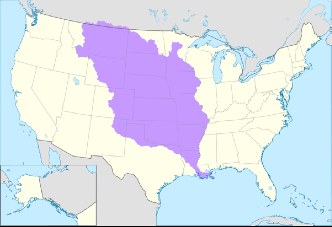
Two hundred twenty-five years ago, on October 1, 1800, Spain ceded Louisiana to France. The Louisiana Territory originally covered the area from the Rocky Mountains to the British colonies along the East Coast. After the Seven Years’ War (1756-1763), France surrendered Eastern Louisiana to Great Britain and Western Louisiana to Spain. In the late 1790s, France and the United States fought an undeclared naval war, mainly in the Caribbean, after the US suspended loan payments to France and signed a trade treaty with Great Britain. France and America settled the conflict on September 30, 1800, the day before France reacquired Louisiana. Fearing French control of the Mississippi, US President Thomas Jefferson began negotiations with French First Consul Napoleon Bonaparte. Secretary of State James Madison completed the sale in 1803 for fifteen million dollars.

Seventy-five years ago, on October 11, 1950, the Federal Communications Commission (FCC) licensed the first color television system, which was CBS’ field-sequential color system. During that year, CBS and RCA vied to become the first approved system. RCA’s system had the advantage of being compatible with black-and-white TVs, but it was ultimately rejected due to poor picture quality. TV producers resisted manufacturing the CBS product because it was expensive, the picture flickered, and it made eight million black-and-white sets obsolete. CBS did start producing several color shows, the first of which premiered in June 1951. Although most people who owned color televisions watched the show, it only aired in Boston, Philadelphia, Baltimore, and Washington, DC. Ultimately, RCA won the "color wars." Its color television system was approved in late 1953 and allowed shows to be filmed in color while being transmitted to all types of TVs using a shorter bandwidth than CBS’ system. Additionally, black-and-white televisions could use adapters to receive these color broadcasts.

Finally, twenty-five years ago, on October 12, 2000, two suicide bombers piloting a small boat filled with explosives severely damaged the USS Cole. The Cole had docked in Aden, Yemen. The bomb blew a forty-foot hole in the side of the ship, killed seventeen crew members, and wounded forty. The attack on the Cole was the second attempt on an American vessel. On January 3, 2000, suicide bombers tried to damage the USS The Sullivans, but the bomb detonated prematurely. Within a few months, FBI and Yemeni investigators arrested two suspects, members of Al Qaida, but they were not convicted until 2004 and released by Yemeni officials in 2007. They were later killed in American airstrikes. Another suspect is in US custody, while a fourth is still wanted.


About the Author

In the early 1990s, John Devoti had a midlife crisis. He did not want a motorcycle (those things are dangerous) or a new wife (his was very cute). Instead, he quit his auditing job and returned to school for his history doctorate. He wrote The Patriotic Business of Seeking Office: James K. Polk and the Patronage. It was not a bestseller. He taught college history for almost twenty years before retiring, and still dabbles by volunteering as a docent at the Roebling Museum in South Jersey. By the way, his wife and editor, Judy, is still very cute.

📖 John’s columns are collected in Tidbits of History: 25 Years of Historical Morsels — available on Amazon, Barnes & Noble, and at the Roebling Museum.
Tidbits of History — September 2025

Interesting Facts From Our Past — by John Devoti

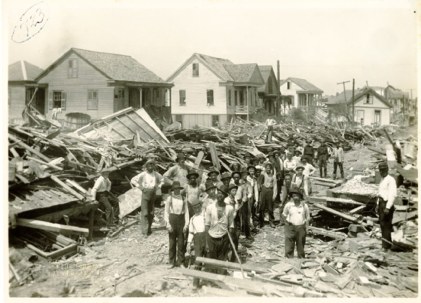
One hundred twenty-five years ago, on September 8, 1900, the Galveston hurricane hit Texas, virtually destroying the city of Galveston and killing between ten and twelve thousand people. By comparison, Hurricane Katrina (2005), the most devastating recent storm, killed about fifteen hundred. Several factors led to the high casualty rate. The United States Weather Service was in its infancy, and hurricane prediction was spotty at best. Ships could not yet use wireless telegraphy to send radio alerts. Cuba did know of the hurricane and had alerted Texas of the storm’s path, but Americans assumed Cubans knew nothing of weather forecasting. Finally, Galvestonians had never experienced a major storm and assumed all such storms would turn left or right and avoid the island. This hubris meant almost nobody evacuated the island.

Seventy-five years ago, on September 15, 1950, US forces landed at Inchon in South Korea. After North Korea’s attack in June 1950, American and South Korean forces had lost steadily until all but a small defensive bubble around Pusan remained. Allied commander Douglas MacArthur designed a daring plan for a beach landing behind the North Korean lines. The American Joint Chiefs of Staff were nervous about the plan. If it failed, America had too few reserves, and South Korea would be lost. Also, an amphibious landing of this size was considered impossible without overwhelming casualties. However, North Korea was completely unprepared, and casualties were light. US forces soon recaptured Seoul, South Korea’s capital, and quickly advanced into North Korea almost to the Chinese border. The war would have been over quickly except for communist China’s intervention. The allies retreated, and the fighting settled into a three-year stalemate along the current North-South border.

Finally, fifty years ago, on September 5 and September 22, 1975, two women attempted to assassinate President Gerald Ford. In the first attempt, Lynette "Squeaky" Fromme was stopped by Secret Service agents after she pulled a gun. Ford was visiting Sacramento to meet with California Governor Jerry Brown and had stopped to greet well-wishers after leaving his hotel room. Fromme was a former member of the Manson Family cult but did not participate in the Tate-LaBianca murders of 1969. The gun Fromme carried had four rounds, but the chamber was empty. She was sentenced to life in prison. Less than three weeks later, Sara Jane Moore attempted to shoot the president. Ford was again in California, this time to attend the AFL-CIO convention in San Francisco. Moore fired two shots, the first missing Ford by a few inches. A bystander grabbed Moore’s hand, and the second shot hit another person in the crowd. The forty-five-year-old Moore developed radical beliefs after becoming fascinated with Patricia Hearst and the Symbionese Liberation Army. She said she wanted to start a revolution against the US government. She, too, was sentenced to life in prison. In October, the Secret Service made the president start wearing a bulletproof trench coat.


About the Author

In the early 1990s, John Devoti had a midlife crisis. He did not want a motorcycle (those things are dangerous) or a new wife (his was very cute). Instead, he quit his auditing job and returned to school for his history doctorate. He wrote The Patriotic Business of Seeking Office: James K. Polk and the Patronage. It was not a bestseller. He taught college history for almost twenty years before retiring, and still dabbles by volunteering as a docent at the Roebling Museum in South Jersey. By the way, his wife and editor, Judy, is still very cute.

📖 John’s columns are collected in Tidbits of History: 25 Years of Historical Morsels — available on Amazon, Barnes & Noble, and at the Roebling Museum.
Tidbits of History — August 2025

Interesting Facts From Our Past — by John Devoti

This month, let’s look at sayings that make little sense. For example, "as sick as a dog" suggests that dogs tend to be sicker than other animals. The expression first appears in Harvey’s Works, a collection of letters and sonnets by Gabriel Harvey. During that period, domestic dogs were generally less healthy; they were not kept as pets but were primarily working animals, not pampered by their owners. In addition, many strays roamed the cities, making them susceptible to various outdoor diseases and ailments common to denizens of cities, where sanitation was rarely adequate. Thus, the expression "sick as a dog" had genuine significance. Other phrases still used today from this period are "dog tired" or "living a dog’s life," neither of which seems relevant.

When somebody says they are feeling good, they might use the phrase "as happy as a clam." However, clams do not seem to be especially cheerful ocean creatures and likely lack the intelligence to understand happiness or sadness. This idiom has been around for quite a while. One of the earliest examples is found in James Hall’s The Harpe’s Head: A Legend of Kentucky in 1833. The phrase is more accurately "happy as a clam in high water." The point is that clams are less likely to become bird food when the high tide covers them, making them safer and, therefore, "happier."

Five hundred fifty years ago, on August 29, 1475, the Treaty of Picquigny ended a brief war between France and England. The Hundred Years War (1337-1453) ended twenty years earlier, but hostility between France and England still bubbled below the surface. In 1474, English King Edward IV reached an agreement with Charles the Bold for his support of an English invasion of France. Charles reneged on the agreement once Edward landed, and France’s Louis XI easily repulsed the invasion. The two sides quickly agreed to end hostilities and agreed to a seven-year truce. Louis would supply Edward and some of his advisors a pension if England stopped bothering him. They also agreed to a marital alliance between Edward’s daughter, Elizabeth of York, and the Dauphin Charles when the couple was old enough. Edward reneged on the marriage deal, and Elizabeth eventually married England’s King Henry VII to end the War of the Roses. By then, England’s internal politics made another invasion of France unlikely.

Four hundred twenty-five years ago, on August 5, 1600, the Gowrie Conspiracy, a purported attack against King James VI of Scotland, took place. King James owed the Ruthven brothers (John, third Earl of Gowrie, and Alexander) 80,000 Scot’s pounds. The king not only wanted to have the debt canceled but also coveted the Ruthvens’ land holdings. John Ruthven was studying at the University of Padua, and, upon his return, he asked to see the king about the debt. James arrived at Gowrie House unannounced. Once he entered the house, James claimed the brothers brought him alone to a locked room and threatened to kill him. The king’s aides rescued him, killing Alexander in the process. The rest of the household was arrested and tried for treason. Gowrie and his servants were all executed except for Alexander Henderson, Gowrie’s assistant, whom many believed was James’ spy. Although James ordered his version of events circulated across the kingdom, most considered the incident a complex land grab.

Seventy-five years ago, on August 25, 1950, President Truman ordered Secretary of the Army Frank Pace to seize control of the nation’s railroads to avert a national rail strike. Truman had a history of interfering in labor negotiations. In 1946, he threatened to nationalize the railways but did not follow through. A strike began but was settled within a week. In 1950, the rail workers again threatened a strike. This time, two months after America entered the Korean War, Truman followed through on his threat and ordered the army to oversee the railroads while the two sides negotiated, using national security concerns to justify the takeover. The negotiations lasted twenty-one months, and after the settlement, the army turned control back over to the companies. In 1952, Truman tried to nationalize the steel industry for the same reasons, but the Supreme Court stopped the action, saying no federal laws permitted the president to take such measures.

Finally, the phrase "he pulled himself up by his bootstraps" is commonly used to describe a politician or businessman who has risen in their field without any outside help. However, this idea seems illogical, as the notion of pulling oneself up by the bootstraps sounds like a great way to end up falling on your butt. There is a reason the phrase appears silly—it originally meant the exact opposite of its current meaning. The Mobile, Alabama Advertiser commented on Nimrod Murphree’s claim to have invented a perpetual motion machine, writing, "Probably Mr. Murphree has succeeded in handing himself over the Cumberland river, or a barn yard fence, by the straps of his boots." Throughout the 1800s, many continued to use this description to ridicule people who made impossible claims. As late as 1927, the London Sunday Times mocked American self-improvement as "The American Bootstrapper." It is unclear when critics shifted from using the phrase for ridicule to using it as praise.


About the Author

In the early 1990s, John Devoti had a midlife crisis. He did not want a motorcycle (those things are dangerous) or a new wife (his was very cute). Instead, he quit his auditing job and returned to school for his history doctorate. He wrote The Patriotic Business of Seeking Office: James K. Polk and the Patronage. It was not a bestseller. He taught college history for almost twenty years before retiring, and still dabbles by volunteering as a docent at the Roebling Museum in South Jersey. By the way, his wife and editor, Judy, is still very cute.

📖 John’s columns are collected in Tidbits of History: 25 Years of Historical Morsels — available on Amazon, Barnes & Noble, and at the Roebling Museum.