Interesting Facts From Our Past — by John Devoti
Four hundred twenty-five years ago, on October 6, 1600, Euridice, the oldest surviving opera, had its premiere. The first opera, La Dafne, by Jacopo Peri, premiered three years earlier in front of a private audience. Its score and libretto have since been lost. Euridice was Peri’s second opera and premiered during the marriage celebration of Marie de Medici to Henry IV of France. As with La Dafne, Euridice premiered to a small audience. Peri created a style that included part spoken and part sung dialogue, similar to today’s operettas. The innovation of sung dialogue was new to drama. The show was a success, not so much for its artistic novelty but for the opulence of the set design. However, the style soon caught on and quickly played to large audiences.
Four hundred twenty-five years ago, on October 21, 1600, Tokugawa Ieyasu defeated the leaders of rival Japanese clans in the Battle of Sekigahara and claimed the title of shogun of Japan, the military leader. The Ashikaga shogunate was a military government that ruled Japan beginning in 1336. The shogunate gradually weakened, and a long civil war raged during the fifteenth and sixteenth centuries. Oda Nobunaga overthrew the shogunate in 1573. He was succeeded upon his death in 1582 by Toyotomi Hideyoshi. Toyotomi appointed five regents to protect his son Toyotomi Hideyori upon his death in 1598 and preserve the Toyotomi dynasty. The regents soon fell out, and after an assassination attempt against Tokugawa Ieyasu, one of the regents, Tokugawa, retreated to Osaka Castle and adopted the role of sole protector. On August 22, 1600, Tokugawa declared war on the rest of the Japanese clans. Tokugawa and his 89,000-man army met the clans at Sekigahara, a small mountainous valley near Kyoto, defeating the clans and taking power, beginning the Tokugawa shogunate, which retained power until 1868.
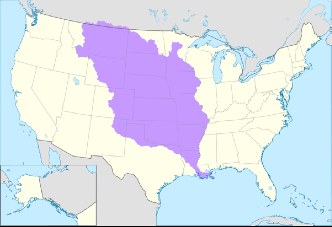
Two hundred twenty-five years ago, on October 1, 1800, Spain ceded Louisiana to France. The Louisiana Territory originally covered the area from the Rocky Mountains to the British colonies along the East Coast. After the Seven Years’ War (1756-1763), France surrendered Eastern Louisiana to Great Britain and Western Louisiana to Spain. In the late 1790s, France and the United States fought an undeclared naval war, mainly in the Caribbean, after the US suspended loan payments to France and signed a trade treaty with Great Britain. France and America settled the conflict on September 30, 1800, the day before France reacquired Louisiana. Fearing French control of the Mississippi, US President Thomas Jefferson began negotiations with French First Consul Napoleon Bonaparte. Secretary of State James Madison completed the sale in 1803 for fifteen million dollars.
Seventy-five years ago, on October 11, 1950, the Federal Communications Commission (FCC) licensed the first color television system, which was CBS’ field-sequential color system. During that year, CBS and RCA vied to become the first approved system. RCA’s system had the advantage of being compatible with black-and-white TVs, but it was ultimately rejected due to poor picture quality. TV producers resisted manufacturing the CBS product because it was expensive, the picture flickered, and it made eight million black-and-white sets obsolete. CBS did start producing several color shows, the first of which premiered in June 1951. Although most people who owned color televisions watched the show, it only aired in Boston, Philadelphia, Baltimore, and Washington, DC. Ultimately, RCA won the "color wars." Its color television system was approved in late 1953 and allowed shows to be filmed in color while being transmitted to all types of TVs using a shorter bandwidth than CBS’ system. Additionally, black-and-white televisions could use adapters to receive these color broadcasts.
Finally, twenty-five years ago, on October 12, 2000, two suicide bombers piloting a small boat filled with explosives severely damaged the USS Cole. The Cole had docked in Aden, Yemen. The bomb blew a forty-foot hole in the side of the ship, killed seventeen crew members, and wounded forty. The attack on the Cole was the second attempt on an American vessel. On January 3, 2000, suicide bombers tried to damage the USS The Sullivans, but the bomb detonated prematurely. Within a few months, FBI and Yemeni investigators arrested two suspects, members of Al Qaida, but they were not convicted until 2004 and released by Yemeni officials in 2007. They were later killed in American airstrikes. Another suspect is in US custody, while a fourth is still wanted.
About the Author
In the early 1990s, John Devoti had a midlife crisis. He did not want a motorcycle (those things are dangerous) or a new wife (his was very cute). Instead, he quit his auditing job and returned to school for his history doctorate. He wrote The Patriotic Business of Seeking Office: James K. Polk and the Patronage. It was not a bestseller. He taught college history for almost twenty years before retiring, and still dabbles by volunteering as a docent at the Roebling Museum in South Jersey. By the way, his wife and editor, Judy, is still very cute.
📖 John’s columns are collected in Tidbits of History: 25 Years of Historical Morsels — available on Amazon, Barnes & Noble, and at the Roebling Museum.

